Number 87     April 2003

NEWSLETTER

OF THE

NEW ZEALAND MATHEMATICAL SOCIETY (INC.)


Contents

PUBLISHER’S NOTICE
EDITORIAL
PRESIDENT’S COLUMN
PRESIDENT’S REPORT 2001-2002
LOCAL NEWS
OBITUARY Bernhard Neumann
FEATURES
CENTREFOLD Bruce Weir
NEW COLLEAGUES
BOOK REVIEWS
CONFERENCES
MINUTES
NOTICES
Application for Membership of the NZMS

MATHEMATICAL MINIATURE 20 Mathematics and Music

ISSN 0110-0025

OBITUARY

Emeritus Professor Bernhard Neumann, AC DSc FAA FRS
(15 October 1909 to 21 October 2002)

The mathematical community in Australasia lost a distinguished member and patron when Bernhard Neumann died, aged 93, in Canberra late last year. The New Zealand Mathematical Society lost one of its foundation members, who was instrumental in establishing the NZMS in 1974 and was elected as an Honorary Life Member soon afterwards.

Bernhard Hermann Neumann was born in Berlin-Charlottenburg, Germany in 1909, and after showing aptitude for mathematics at an early age he studied at university in Freiburg and Berlin, and gained his first doctorate (in group theory) in 1932, at the age of 22. He moved to England in 1933, and two years later completed a second doctorate at the University of Cambridge, from which he also won the Adams Prize.

He married Hanna von Caemmerer (another mathematician) in 1938, and the couple had five children: Irene, Peter, Barbara, Walter and Daniel. Peter Neumann and Walter Neumann are also mathematicians well known to many readers of this Newsletter.

Bernhard was a lecturer at Cardiff until the second world war, when he was interned for several months (as an enemy alien) but later served in a variety of roles for the British Army, while Hanna completed her doctorate at Oxford. Bernhard subsequently held academic positions at the Universities of Hull and Manchester, where he pursued research in algebra and supervised a significant number of students, many of whom have become professors in various parts of the world. Bernhard served on the Council of the London Mathematical Society from 1954 to 1961, including a term as Vice-President from 1957 to 1959, and he was elected a Fellow of the Royal Society of London in 1959.

In 1962 Bernhard was appointed as Foundation Professor of Mathematics in the Research School of Physical Sciences at the Australian National University, and soon after Hanna was appointed as a Professor of Pure Mathematics in the School of General Studies. Bernhard was elected as a Fellow of the Australian Academy of Science in 1964. He was President of the Australian Mathematical Society (1964-66) and Foundation President of the Australian Association of Mathematics Teachers (1966-67). He was a driving force behind the establishment of the Bulletin of the Australian Mathematical Society in 1969, and served as its editor for 11 years.

Together with Hanna he attended many of the annual NZ Mathematical Colloquia in the 1960s, and his suggestion that New Zealand mathematicians form a special geographical branch of the Australian Mathematical Society proved a very effective catalyst for the formation of the NZ Mathematical Society in 1974. In fact Bernhard became the very first paid-up member of the NZMS, and continued to support it in many ways in the years following.

Hanna died in 1971 after a brief illness. Bernhard married again in 1973, to Dorothea Zeim, and they continued living in Canberra following his official retirement from the ANU in 1974.

Bernhard published well over 100 research articles in international journals, as well as numerous scholarly reviews, lecture notes and essays about important mathematics and mathematicians. His research covered a range of topics in pure mathematics, and he made particular contributions to the theory of division rings, universal algebra, varieties of groups, automorphism groups, wreath products of groups, and group presentations (including what are now known as HNN extensions, named after Graham Higman, Hanna Neumann and Bernhard Neumann).

He gave lectures at very many conferences and universities around the world during his long career, and provided valuable advice and mentorship to a large number of early career researchers and students, not just his own. Also following his retirement he continued to serve the mathematical community by publishing further research, actively participating in conferences and giving lectures, and editing the superbly informative IMU Canberra Circular, which was distributed worldwide.

Bernhard was a strong supporter of ANZIAM (Australia and New Zealand Applied Mathematics) and the CMSA (Combinatorial Mathematics Society of Australasia), and a regular participant in their annual conferences. He was also a vital supporter of the Australian Mathematics Competition (which operates in schools in Australia and New Zealand), and very well known for his encouragement of students in all branches of the subject. The annual prize of the Australian Mathematical Society for the best paper presented by a student at its annual meeting bears his name.

He served on numerous other committees and provided valuable advice to many individuals and mathematical science departments in Australia and New Zealand. For example, in 1987 he encouraged the Mathematics and Statistics Department at The University of Auckland to limit its practice of sending its graduate students overseas and to build up its own PhD programme.

Bernhard loved cycling, music, chess, fine wines, walking in national parks, and spending time with friends and his family.

He was awarded seven honorary degrees, and in 1994 he was made a Companion of the Order of Australia. Bernhard Neumann's contributions to the international community during his lifetime have been remarkable, and he will be very much missed.

Marston Conder

FEATURES

THE ANZIAM MATHEMATICS-IN-INDUSTRY STUDY GROUPS ARE COMING TO NEW ZEALAND

By arrangement with ANZIAM (Australia New Zealand Industrial and Applied Mathematics, which is a Division of the Australian Mathematical Society but embraces both countries), the ANZIAM Mathematics-in-Industry Study Group (MISG), which has operated in Australia since 1984, is shifting to New Zealand for 2004 and 2005. Initiated by Dr Noel Barton of CSIRO, the MISG meetings have moved around the state capitals of Australia, and most recently were hosted by the University of South Australia in Adelaide.

New Zealand participation has steadily increased and at the recent MISG in February 2003, three of the twelve problem moderators were New Zealanders. The Australia-based ANZIAM organisers are, of course, now heavily involved in the hosting of the forthcoming ICIAM Congress in Sydney in July 2003, which is a really major commitment.

The goals of MISG are to reach out to industry (interpreted very broadly to include biological, medical and financial applications, as well as the traditional engineering-based ones) to show them the power of mathematics when it is applied to their particular problems. Through the holding of MISG meetings, academic mathematicians find out about real applications, and many postgraduate projects in Industrial Mathematics arise through MISG involvement. The impact on the teaching of Applied Mathematics is very positive in every country where these types of activities exist (e.g., UK, Europe, USA, Australia).

Following the formation of the Centre for Mathematics in Industry (CMI) within the Institute of Information and Mathematical Science (IIMS) at Massey University's Albany campus, it has been recommended that the MISG's in 2004 and 2005 be organised from there, using a network of collaborating institutions throughout the country.

Principal arrangements are now being made by Professor Robert McKibbin (Head of IIMS) and Professor Graeme Wake (Adjunct Professor of Industrial Mathematics within CMI). Graeme Wake has been nominated as Director of MISG and is now devoting half his time to this initiative. It is intended that the Centre will continue this kind of industry-linkage after the MISG (ANZIAM) returns to Australia in 2006.

We are pleased to announce that MISG 2004 will be held:

  • at The University of Auckland (City campus)
  • 26-30 January 2004

(Note that ANZIAM 2004 follows immediately afterwards in Hobart, 1-4 February 2004).

To provide new links with potential industrial partners, three regional preliminary workshops are planned for later this year, following ICIAM 2003. These will be held in:

  • Wellington, at Industrial Research Ltd, 4-5 September 2003
  • Auckland, Massey University at Albany, 30-31 October 2003
  • Christchurch, LincLab at Lincoln, 4-5 December 2003.

New industrial participants will be exposed to past MISG case studies at these informal meetings. It is expected that industrial partnerships will form with mathematics groups as a result of these activities.

Everyone is invited to participate in all of these meetings–there is no charge for academic and student participants. Industrial participants in MISG 2004 and 2005 will be asked to contribute to the costs of those meetings.

Funded by the NZ Institute for Mathematics and its Applications, Postgraduate Scholarships are available for support of Masters and Doctoral thesis study in any area of industrial mathematics. Details of these appear elsewhere in this Newsletter. Prospective students are invited to apply.

Robert McKibbin
Head, IIMS

Graeme Wake
Director, MISG 2004-5

Centre for Mathematics in Industry
Massey University at Albany

APPLIED MATHEMATICIANS IN SOUTH KOREA

Following up on a conversation with Dr Douglas Rogers, Graeme Wake, subsequently on sabbatical at Oxford from the University of Canterbury, initiated discussions with other visitors to OCIAM on the possibility of forming a Visiting Foreign Team Professorship in Applied Mathematics at KAIST (Korean Advanced Institute of Science and Technology), a leading university with a strong graduate programme in South Korea. This happened in the last half of 2001.

A team of four was then formed to formulate a proposal to submit to Professor Kil Hyun Kwon, the Head of the Division of Applied Mathematics at KAIST. In addition to Graeme, the Team includes John Donaldson from the University of Tasmania, Mark McGuinness from Victoria University of Wellington, and Henning Rasmussen from the University of Western Ontario. The proposal was accepted. To assist with developments, each member, in succession, makes short visits hosted by the Division of Applied Mathematics at KAIST. These began in September 2002, and are scheduled to continue until August 2005.

The major objective is to create interest in, and enthusiasm for, the application of mathematics in industry amongst the staff and students in KAIST and to provide input for these ideas in the curriculum.

The wide range of experience of the Team members in research, teaching, exposure to industrial mathematics programmes at OCIAM and IMA(US) and attendance at MISGs in Australia was brought to bear in forming the plan which includes

  • the development of a teaching programme at masters/PhD level and
  • the establishing of industrial contacts through the gradual introduction to South Korea of a Mathematics in Industry Study Group (MISG) similar to that currently operating in Australia and New Zealand.

The Team hopes to foster relationships between Asia and Australia and New Zealand. Three students and Professor Kwon came from KAIST to participate in the MISG held in Adelaide in February 2003. In addition a showcase meeting about MISG is scheduled to be held in KAIST in July, the week before ICIAM 2003, involving members of OCIAM and the Team.

John D Donaldson, University of Tasmania, Hobart
Graeme Wake, University of Canterbury & Massey University at Albany
Mark McGuinness, Victoria University of Wellington
Henning Rasmussen, University of Western Ontario, Canada

Graeme Wake
John Donaldson

"IT WAS GREEK TO ME"

The New Zealand Herald published an article (Wednesday, August 14, 2002) about the creative accounting practices of some dairy business, illustrated with a photograph of some equations chalked on a blackboard.

The editor of that article appears to have glanced at that photograph and to have recognized the Greek letters l and q in those equations. Presumably she decided that "It was Greek to me" (as did Casca, in Julius Caesar ), and passed the photograph for publication.

Garry J Tee

CENTREFOLD


Bruce Weir

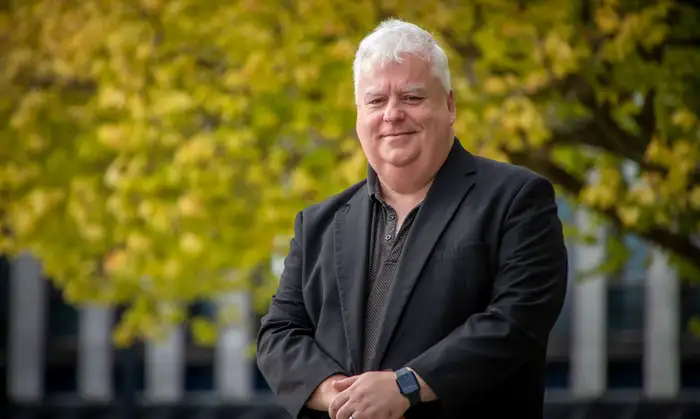
Bruce Weir is one of New Zealand's most valuable exports. Bruce is now William Neal Reynolds Distinguished Professor of Statistics and Genetics and Head of the Bioinformatics Research Center at North Carolina State University in Raleigh. In addition to an extensive and deserved reputation in the fields of genetics and statistics he has also made a central contribution to my own field of Forensic Science. His CV containing seven books, four named lectures, 19 PhD and 13 postdoctoral students, 143 refereed papers, nine editorial positions, 26 articles of correspondence, six encyclopedia entries, and a host of honours including being elected to an honorary FRSNZ in 1998 and a fellow of the American Statistical Society in 1999, does not do justice to his contribution to several fields of scientific endeavour. For non-statisticians, the OJ Simpson case is perhaps what Bruce is most famous for. However, it is but one highlight in Bruce's multifaceted career. What was his path from Christchurch New Zealand, to the Superior Court in the County of Los Angeles to testify in the Simpson case?

Bruce will be 60 on New Years Eve, 2003. It's always easy for me to remember his birthday. His slim frame is still fully capable of disarming a robber who went for his wallet and he's walked me into the ground more than once. We have travelled the world together lecturing and I'm always the first to fade while he is still teaching or working.

He is the eldest child of the late Gordon and Peg Weir. His mother, aged 83, two sisters and a brother all still live in New Zealand. He was a foundation pupil of Shirley Boys' High School and attributes some of his success to the headmaster, Charles Gallagher, who spotted his potential and encouraged him to pursue further study. He went to University of Canterbury, graduating with a BSc (with first class honours in Mathematics) in 1965. After stints working on rubbish trucks and painting walls in local hospitals he obtained a summer internship with the Applied Mathematics Division of the DSIR working with Brian Hayman. Prior to his internship Bruce had concentrated solely on mathematics and was completely ignorant of genetics. Recall that this is time in the history of genetics when greats like R.A. Fisher, S. Wright, J.B. Haldane, J. Crow and M. Kimura were active. Brian's asking him to read the book "Genetics" by H. Kalmus began the great synergy of mathematics and genetics that has shaped the rest of Bruce's career.

After graduation from Canterbury he worked for eight months at the DSIR in Wellington and then following Brian Hayman's suggestion went to North Carolina State University to pursue his PhD in statistics with a minor in genetics under Clark Cockerham. The chance to study with one of the greats of our time was an opportunity that Bruce did not waste, beginning a partnership that was to last 30 years ending only with Dr Cockerham's death. Bruce asserts that he has been blessed by being allowed to use his love of mathematics and statistics in an area that is endlessly fascinating.

After receiving his PhD Bruce spent a postdoctoral year followed at University of California, Davis working with Bob Allard. Bruce returned to New Zealand in 1970 as a senior lecturer and later reader at Massey. During this time Bruce or maybe his fancy car, a 1966 green-blue Mustang, caught Beth's eye, leading to marriage and a life long friendship that is still obvious to even the most casual observer. Beth is herself a respected academic with interests in the theory and practice of early reading teaching. Bruce and Beth's two children, Claudia Beth in 1973 and Henry Bruce in 1975 were born during the seven years the Weirs spent at Massey. Henry was a month old when the family returned to North Carolina in 1976 to continue Bruce's work with Clark Cockerham. New Zealand nearly lured Henry back with the promise of the outdoor life, but both children are now firmly ensconced in the United States.

Starting with his PhD thesis, Bruce's early work was mostly concerned with the formulation of the genetic relationship between individuals in diverse populations at multiple loci. Working with his mentor, Clark Cockerham, he formulated identity by descent measures at two linked genes between individuals under many differing situations. These included a consideration of inbreeding, selection, and overlapping populations. He also considered sib-ships and other pedigrees, mixed self and random mating populations; and reciprocal crosses. This pioneering work laid the rigorous foundation to characterise the relationship and inheritance of multiple genes with linkage, inbreeding and selection in diverse populations.

"One of Bruce Weir's enduring contributions to statistical genetics is his monumental work on the elaboration of descent measure theory. This theory provides the mathematical tools for following the transmission of genes and pairs of genes through multiple generations. These tools can then be applied to solving a wide variety of problems ranging from analysis of the dynamical behaviour of linkage disequilibria in mixed mating systems, to the estimation of effective recombination rates between genes based on population data, to the dissection of complex traits." Michael Clegg, Presidential Chair and Distinguished Professor of Genetics, University of California at Riverside.

Bruce then shifted his attention to constructing statistical methodology to infer genetic relationship measures, such as linkage disequilibrium (LD). He provided the statistical framework for inferring the complete LD structure between two loci based on genotypic data and also examined the sampling properties of LD statistics. At this time he published a seminal in LD analysis. This line of work provided critical foundation theory for disease gene mapping research. Bruce Weir and his colleagues developed the statistical methodology to infer linkage between molecular markers and disease genes to test and estimate the genomic location of disease genes. These statistical methods have been widely used in the scientific community and directly applied by him and his collaborators to successfully locate cystic fibrosis genes and a longevity gene in humans.

"Bruce Weir has made central contributions to the statistical methodology for complex trait analysis through his painstaking work on the theoretical calculation of genetic variance components in the presence of genetic linkage and finite population size." Michael Clegg.

"He [Bruce Weir] has pioneered the localization of human disease genes through new statistical procedures." Major Goodman, William Neal Reynolds and Distinguished University, Professor of Crop Science, Statistics and Genetics, North Carolina State University.

Bruce Weir's work on genetic relationship measures is closely related to the study of population genetic structures, i.e. the structure and level of differentiation and relatedness among individuals in structured populations. Sewell Wright in 1951 proposed a set of statistics, called F-statistics, to characterise population structures. It was Weir and Cockerham in 1984 who unified the statistical methods for estimating F-statistics. This paper is a citation classic in population genetics and forensic science with a staggering 1,676 citations–so far! Bruce's papers include the two most authoritative reviews of research progress in the study of population structures in human and other species.

"Among his basic work he [Bruce Weir] has, in particular, developed methods which have been and continue to be widely used world-wide for studying the differentiation among populations, including groups and populations of animals and plants in nature, livestock breeds, and local populations of humans." W.G. Hill, FRS, Professor of Animal Genetics, Formerly Dean of the Faculty of Science and Engineering, The University of Edinburgh.

Much of his research is summarised in his definitive book "Genetic Data Analysis" which has gone through two editions and has been translated into Russian and Chinese. The third edition is about to appear.

Bruce Weir's contributions in the use of DNA profiling for personal identification in forensic science are many fold. He brought his sharp mind and a body of statistical and genetic knowledge to a field that had been overpopulated by diligent scientists without these backgrounds. He led the effort to correct the erroneous sections in the first National Research Council (NRC) report on DNA methods in forensic science, 1991. The second NRC report, 1996, shows the results of this effort and completely adopted his methods and views. The 1998 book, Interpreting DNA evidence jointly authored with Ian Evett (retired recently) from the United Kingdom Forensic Science Service, which is now considered the field text for forensic caseworkers, lawyers, judges and statisticians involved in DNA interpretation. He is truly a giant and guiding light in this field. I would consider him to have made the single largest contribution to this science of any person working in the last few decades. This is a view that would be shared by many other forensic scientists.

"Dr Weir has worked tirelessly to establish valid scientific foundations for assessment of forensic DNA evidence, and to educate forensic scientists and the wider community. In this controversial arena, he is almost unique in his steadfast adherence to the highest standards of scientific professionalism. He has established a unique position as a true expert in this field and has retained the respect of collaborators and adversaries alike." Elizabeth Thompson, Professor of Statistics and Biostatistics, University of Washington.

So I come to the OJ Simpson case. At that time (1995) I was in the United States working for Bruce on general theoretical issues in forensic science. We had analysed some of the data in the trial but the real reason that Bruce was chosen as an expert witness was his reputation for scholarly impartiality and the fact that we were the only people in the United States working on likelihood ratios for mixed DNA profiles. The 54 page report, the testimony and the result are all public record. Much can be said about the trial but I record my opinion that Bruce set a standard for scholarly interpretation of evidence that has yet to be equalled. More, however, he set a standard for the behaviour of witnesses that will be a lesson for forensic scientists for decades.

Bruce is an educator and visionary leader and one would suspect that his greatest achievements may yet to be seen as both he and his students continue the work. He is known throughout the world as not only a prolific researcher, but a generous and innovative educator as well. He has also established several highly successful research and training endeavours including the NCSU Summer Institute in Statistical Genetics and Web-based Courses.

"Dr Weir has also excelled as an educator. The statistical genetics group at N.C. State is one of the foremost groups of its kind in the world, and much of that is due to Dr Weir. ... One of the unique aspects of the statistical genetics program is the interaction with the Genetics department." Norman Kaplan, Mathematical Statistician, National Institute of Environmental Health Sciences.

"Bruce was a very supportive supervisor, from the time I made enquiries, through choosing PhD committees, courses, thesis topic, to writing up and defending the thesis. In addition to course requirements, he also got me involved in critiquing scientific writing and being exposed to practical aspects of data analyses which have been invaluable in my career." Ken Dodds, Agresearch, graduate student of Bruce Weir, 1984-1986.

These pages do not do justice to a career which I hope has yet to reach its zenith. But they are completely inadequate to describe the man. I have met a few great minds but in Bruce I have met both a great mind and a great man. I cannot begin to repay my own debt, both personal and intellectual, to him.

John Buckleton
Special thanks to James Curran, Ken Dodds,
Chris Triggs, Zhao-Bang Zeng, and Beth Weir
who provided material

Centrefolds Index

NEW COLLEAGUES

Dr Martyn Nash

Dr Martyn Nash has joined the Department of Engineering Science (and the Bioengineering Institute) as a Lecturer. He completed a BE in Engineering Science followed by a bioengineering PhD, supervised by Peter Hunter (Engineering Science) and Bruce Smaill (Physiology), on mechanics and material properties of the beating heart. Martyn has just spent six years as a post-doctoral research scientist in Physiology at Oxford University, working with Professor David Paterson on experimental and clinical epicardial and body surface ECG mapping. Martyn lists his primary research interests as cardiac electromechanics modelling; experimental/clinical ECG imaging and analysis; mammographic deformation modelling.

Don Nield

Dr Dominic Savio Lee

Dominic Savio Lee received the MSE and PhD degrees in Mathematical Sciences from the Johns Hopkins University in 1993 and 1996 respectively. His doctoral dissertation was on statistical resampling methods. From 1996 to March 2003, he worked as a Statistical Scientist at DSO National Laboratories in Singapore, where he applied probabilistic and statistical ideas to signal and image processing. His research interests are in computational statistics, Bayesian statistics, probability models and stochastic processes.

Charles Semple

New Colleagues at Victoria University of Wellington

Victoria University has recently acquired two new members of its academic staff in Mathematics, the first such appointments in over a decade. They fill vacancies arising from the retirement of Chris Grigson and the departure of Vladimir Pestov to a position in Canada.

Dr Matt Visser

Dr Matt Visser has been appointed Reader in Mathematics. He graduated from VUW with an MSc in Mathematics in 1981, and completed a PhD in Physics at Berkeley in 1984. After holding post-doctoral positions at the University of Southern California and the Los Alamos National Laboratory he moved to Washington University, St. Louis, where he was Research Associate Professor at the time of his return to New Zealand. His research interests are in differential equations and modelling applied to quantum physics, cosmology, analogue gravity, black holes, and the like. In addition to numerous papers, Matt is the author of the book "Lorentzian Wormholes–from Eisnstein to Hawking", and co-editor of the recent book "Artificial Black Holes". He is principal investigator on the Marsden funded project "How generic is Einstein's theory of general relativity?" and associate investigator on another Marsden project called "Probing brane world cosmologies".

Dr Yinhuo Zhang

Dr Yinhuo Zhang, who has taken up a lectureship, is an algebraist who was born and raised in China. He graduated MSc from Jiangxi Normal University in 1989 and obtained his PhD in 1993 from the University of Antwerp, Belgium, with a thesis on Hopf Galois theory for non-commutative algebras. After holding post-doctoral fellowships at Antwerp and Leuven in Belgium he was a visiting fellow at the Max-Planck Institute for Mathematics in Bonn, Germany before taking up a lectureship at the University of the South Pacific in Fiji. Yinhuo's research interests include representation theory of Hopf algebras and quantum groups, Galois theory, Brauer groups, non-commutative algebra and geometry, and coding theory and cryptography. He is involved in a large European Science project on non-commutative geometry and is writing a book on coalgebras.

Rob Goldblatt

BOOK REVIEWS

SPRINGER-VERLAG PUBLICATIONS

Information has been received about the following publications. Anyone interested in reviewing any of these books should contact

David Alcorn
Department of Mathematics
The University of Auckland&
(email: alcorn@math.auckland.ac.nz)

Audin M, Geometry. 357pp.
Auslender A, Asymptotic cones and functions in optimization and variational inequalities. 265pp.
Barucci E, Financial markets theory. 467pp.
Bonnans JF, Numerical optimization. 423pp.
Capasso V (ed), Mathematical modelling for polymer processing 320pp.
Cohn PM, Basic algebra. Groups, rings and fields. 466pp.
Cohn PM, Further algebra and applications. 452pp.
Dana R-A, Financial markets in continuous time. 324pp.
Estep D, Practical analysis in one variable. 621pp.
Gelfand SI, Methods of homological algebra. (2nd ed) 370pp.
Goldschmidt D, Algebraic functions and projective curves. 179pp.
Grabmeier J, Computer algebra handbook. 638pp.
Gras G, Class field theory: from theory to practice. 492pp.
Gros M, Calabi-Yau manifolds and related geometries. 239pp.
Hildebrandt S (ed), Geometric analysis and nonlinear partial differential equations. 673pp.
Jacod J, Probability essentials. (2nd ed) 254pp.
Jacod J, Limit theorems for stochastic processes. (2nd ed) 661pp.
Jech T, Set theory. (3rd rev. ed) 769pp.
Jost J, Postmodern analysis (2nd ed). 367pp.
Kabanov Y , Two-scale stochastic systems. 266pp.
Langtanen HP, Computational partial differential equations. (2nd ed) 855pp.
Lebedev LP, Functional analysis in mechanics. 238pp.
Lee JM, Introduction to smooth manifolds. 628pp.
Maclachlan C, The arithmetic of hyperbolic 3-manifolds. 463pp.
Marker D, Model theory: an introduction. 342pp.
Martinet J, Perfect lattices in Euclidean spaces. 523pp.
Murdock J, Normal forms and unfoldings for local dynamical systems. 494pp.
Nestruev J, Smooth manifolds and observables. 220pp.
Osher S, Level set methods and dynamic implicit surfaces. 273pp.
Polster B, The mathematics of juggling. 226pp.
Reed BA (ed), Recent advances in algorithmic combinatorics. 351pp.
Robdera MA, A concise approach to mathematical analysis. 362pp.
Schattschneider D, M.C. Escher's legacy. 458pp.
Shafarevich IR, Discourses on algebra. 276pp.
Sigler L, Fibonacci's Liber Abaci. 636pp.
Stillwell J, Elements of number theory. 254pp.
Tits J, Moufang polygons. 535pp.
Van der Put M, Galois theory of linear differential equations. 438pp.
Winkler G, Image analysis, random fields and Markov chain Monte Carlo methods. (2nd ed) 388pp.
Woodhouse NMJ, Special relativity. 192pp.

Computational Line Geometry
by H. Pottmann and J. Wallner, (Mathematics and Visualization),
Springer-Verlag, New York, 2001, 563pp, Euro 74.95. ISBN 3-540-42058-4.

This volume appears in the Springer series entitled Mathematics and Visualisation. The authors were initially motivated by their interest in a wide variety of practical problems in engineering and geometric design to attempt to write a book on classical geometry and applications to geometric computing. This presented itself as too ambitious a goal, so they wisely settled on a more restricted theme, that of computational line geometry. It is clear nonetheless that they were keen to capture the richness of the geometrical setting. The result is that, while maintaining line geometry and the associated computational methods as central, the book touches on a wide variety of geometries and geometrical methods.

The applications come from numerous areas: geometric design, robotics, surface milling and machine cutting, geometrical optics, statics, kinematics and motion planning. However, it is the geometry that rules and guides the structure of the book. The applications are woven into chapters whose themes are different aspects of line geometry. The computational problems that are addressed are typically data fitting, interpolation, approximation and parametrisation.

Line geometry concerns the set of lines in three-dimensional space. While the applications occur generally in Euclidean space, projective geometry provides the best framework and the book begins with Arthur Cayley's dictum that "All geometry is projective geometry". The first chapter establishes the geometric foundations. It includes a relatively lengthy introduction or tutorial in projective geometry, emphasising the importance of homogeneous coordinates and linear algebra in this computational setting. There is also a briefer introduction to other relevant and/or interesting geometries: affine, equiaffine, equiformal and Cayley-Klein. Also in this chapter are sections on differential geometry, algebraic geometry and rational curves and surfaces for geometric design. Computation of invariants is emphasised. The algebraic geometry section is done in the spirit of Gröbner bases. This fits the computational focus, but though the associated techniques are certainly used in, for example, robotics research they make scant appearance throughout the rest of the book. By contrast, the material on Bézier curves and surfaces and NURBS provides a central theme for subsequent chapters.

It is in Chapter 2 that the beautiful idea of representing the lines in projective 3-space as a quadric hypersurface (the Klein quadric) in P5 is introduced. Rather than the classical ad hoc approach to Plücker coordinates prevalent in the engineering literature, this is done using exterior algebra and the proper generalisation to Grassmann varieties is presented. This subject is suffused with fascinating constructions and the Study sphere representation of the set of oriented lines (or equivalently Euclidean motions or dual spherical motions) using the ring of dual numbers is described here.

Much of the classical geometry of lines concerns linear complexes: the intersection of the Klein quadric with a projective hyperplane. See, for example Jessop's (1903) Treatise on the Line Complex. Here, the line complex is defined in terms of a null polarity, thus emphasising the importance of the projective viewpoint. The classical kinematic interpretation of a linear complex is as the set of normals to the helical trajectories of a screw motion. This gives physical meaning to the fundamental invariant p, the pitch. Pottmann and Wallner present the set of line complexes as the natural description of the projective 5-space that contains the Klein quadric. Although they introduce Ball's idea of screw theory, they thereby ignore more recent development of this theory by Hunt et al which represents this ambient space more naturally as screw space, foliated by the family of pitch quadrics.

In the following chapters, a number of themes around line geometry are developed: approximation in line space and fitting of linear complexes in Chapter 4; ruled surfaces, including their differential and algebraic geometry in Chapter 5. The computational theme is picked up in fitting by Bézier surfaces and other approximations of and by ruled surfaces. The importance of offset surfaces in milling and machining comes to the fore. Chapter 6 concentrates on the special case of developable surfaces. Practical descriptions by means of Taylor expansions and their connection to the geometry of the surface, more on Bézier and NURBS are given. An interesting section on the cyclographic mapping and Laguerre geometry with applications in optics are here.

The final two chapters concern line congruences and complexes-2- and 3-parameter families of lines in the Klein quadric (not necessarily linear)–and projections of the Klein quadric and groups of motions (kinematic mappings) which enable these spaces to be visualised in a variety of ways.

There is a vast amount of fascinating geometry of all sorts in this book. The topics are perhaps somewhat eclectic–they mirror the primary interests of the authors–but, because the motivation is to develop the geometry that applies to real world problems, the subject is far from monolithic and is open to interpretation. The ideas here build up layer upon layer. In the end, the authors have been mostly successful in sustaining their central theme, despite the need to weave together projective, differential, algebraic and metric geometry. They have also presented the mathematics in a predominantly modern way. That is important because there exist in the engineering literature archaeological remnants of outdated notation and concepts. This is not however a pure mathematical work and the authors have, for example, overlooked recent advances in singularities (Porteous, Bruce et al) and their application to differential geometry and kinematics.

The large number (264) of line diagrams are of very good quality and considerably enhance one's understanding. The smaller group of colour plates, by contrast, are divorced from the text, and don't seem to add much other than to meet the aims of the series title. Clearly the book is intended to be didactic but, though it abounds in examples and in many places invites the reader to fill in details or work through a problem for themselves, I feel it would benefit (other than in adding to the already considerable length) from the inclusion of explicit exercises.

However these are limited and qualified criticisms of a book which is without doubt an important contribution to this growing branch of geometrical research.

Peter Donelan
Victoria University of Wellington

Mathematical Biology. I: an introduction
(3rd ed), by J. D. Murray, Interdisciplinary Applied Mathematics, 17,
Springer-Verlag, New York, 2002, 551pp, Euro 44.95. ISBN 0-387-95223-3.

Mathematical biology, standing at the interface of the two disciplines, involves the use of mathematical ideas to further understand biological processes. Both biologists and mathematicians benefit from the interaction; biologists have access to the abstraction and description of qualitative dependence on parameters that are naturally part of mathematics, and mathematicians have access to a vast array of interesting problems to tackle.

Jim Murray's "Mathematical Biology", first published in 1989, was written to outline some of the accepted mathematical treatments of a variety of biological problems. The problems ranged from population dynamics to Hodgkin and Huxley's theory of action potential generation and the geometric patterning of seashells. The mathematical techniques presented covered the spectrum from delay-differential equations, through singularly perturbed ODEs to time-dependent PDEs in two spatial dimensions.

Much of the book can be described as the application of deterministic nonlinear dynamical systems theory to specific biologically-inspired problems. Older topics such as predator-prey interactions and reaction-diffusion PDEs are covered, as are population dynamics and coupled oscillators. Some of the less well-known topics covered include an analysis of the Belousov-Zhabotinskii reaction and the dynamics of infectious diseases, including HIV.

In this third edition, Murray has split the contents of the second edition [4] (which was nearly 800 pages in length) into two volumes, of which I am reviewing the first. He has placed the simpler concepts in the first volume, reserving the more complex ideas for the second volume (subtitled "Spatial models and biomedical applications"). In addition, Vol. I contains new chapters on temperature-dependent sex determination (TDSD), modelling marital interactions and the use and abuse of fractals. It also includes a number of new sections detailing recent work on specific topics. The bibliography has been expanded and now contains nearly 600 references.

Of the new chapters, the one on TDSD is based on the observation that alligator eggs incubated at low temperatures tend to hatch females, while those at higher temperatures tend to hatch males. Murray then assumes a temperature gradient from cool marsh to warm levees and investigates the resulting male/female density profiles. He also investigates the effects of taking the age structure of the populations into account and discusses some interesting conclusions about the steady state female/male ratio. The chapter on marital interactions describes new work by Murray and others that is still in the developmental stage. The underlying assumption is that the success or otherwise of a marriage is largely determined by the difference between the number of positive comments and the number of negative comments by both partners (measured for example, during a 15 minute discussion). While some may challenge the validity of the conclusions, it certainly contains some intriguing ideas. The chapter on fractals introduces some basic ideas and warns against concluding that simply because a computer-generated fractal looks like a tree/cell/patch of lichen, the former does not provide a biological explanation for the latter.

The book is very accessible, with plenty of clearly-written text between the many equations. There are many black-and-white figures, all of high quality. Indeed, for the reader with some mathematical background and an interest in biological processes, it could be viewed as a recreational read, which is not often the case with maths textbooks. The book does not assume any particular biological knowledge, as each chapter starts with a short discussion of some of the relevant biology and includes recommendations for further reading. Most chapters close with up to ten exercises at the advanced undergraduate/graduate level.

The second edition, published in 1993, was necessarily selective in its coverage, since at the time of its writing it was impossible to touch on all topics that could be thought of as mathematical biology. With the explosion of interest in various aspects of the subject, that is even more the case now, and books like the one under review are now being replaced by specialist texts such as "Theoretical Neuroscience" by Abbott and Dayan [1], Kot's "Elements of Mathematical Ecology" [3], and Keener and Sneyd's "Mathematical Physiology" [2]. That said, this third edition would provide an excellent textbook for an applied maths or nonlinear dynamics course at either advanced undergraduate or graduate level, since it has no shortage of examples to motivate or demonstrate the particular concept being discussed.

In summary, any mathematician considering collaborating with a biologist, or having the slightest interest in mathematical biology, should read this book.

[1] L. F. Abbott and P. Dayan. Theoretical Neuroscience: Computational and Mathematical Modeling of Neural Systems. MIT Press, 2001.

[2] J. Keener and J. Sneyd. Mathematical Physiology. Springer-Verlag, 1998.

[3] M. Kot. Elements of Mathematical Ecology. Cambridge University Press, 2001.

[4] J. D. Murray. Mathematical Biology (second, corrected edition). Springer-Verlag, 1993.

Carlo Laing
Institute of Information and Mathematical Sciences
Massey University

Modeling and Simulation in Medicine and the Life Sciences
(2nd ed), by Frank. C. Hoppensteadt and Charles S. Peakin, Texts in Applied Mathematics 10,
Springer-Verlag, New York, 2000, 354pp, Euro 59.95. ISBN 0-387-9572-9.

The series to which this book belongs is pitched at "advanced undergraduate and beginning graduate courses". The authors state in the preface that their purpose is to "illustrate how mathematics can be used" and to "make available to students having at least one term of calculus topics in the life sciences and medicine that have benefited from mathematical modeling and analysis". The first five chapters describe physiological systems: blood circulation, the lungs, cell membranes, the kidney and muscle mechanics. Each system is presented accessibly, with schematic diagrams of the main components and their interactions and a clearly written text taking the reader through a series of equations that build up the model. Each chapter starts simply, and adds layers of complexity as realistic questions relating to the system are addressed. Numerical schemes for analyzing the models are developed and presented as Matlab programs. Finally, some numerical experiments are suggested so that the student can explore features of the models. The remaining five chapters discuss neural systems, population dynamics, genetics, epidemiology and population growth and dispersal. Each of these chapters present the principal ideas of the topic, with relevant equations. The book concludes with two short appendices: 'Getting started with matrices and MATLAB' and 'Background on random processes'. Overall the book is clearly written and produced to the high standard that one expects of Springer. It fulfils the promise in the title.

So, why is it that I don't like this book? The disappointment set in when I realized that I had not taken sufficient notice of its title. This is a book about modeling and simulation. The first half in particular is very good on the process of model development, but once that has been achieved the model is explored numerically. There are some exceptions, for example the section on cascades of nephrons in Chapter 4 utilises some approximations to make the model tractable. The later chapters are more mathematically satisfying, especially the treatment of age structures in Section 7.2 and the overview of genetics in Chapter 8, but overall the presentation of mathematical ideas is lacking. Sometimes this lack comes across as sloppy, as in Chapter 1 where a heartbeat is described as having period T, and we are then told that diastolic arterial pressure is Psa(T) and systolic arterial pressure is Psa(0), which would imply that they are equal. The accompanying figure shows the pressure to be discontinuous at integer values of T, the rigorous use of Psa(T-) and Psa(0+) could have been used here to introduce some concept of limit. Sometimes the lack is more serious, such as the glib description of a partial derivative in Chapter 4, or the dreadful statement: "The determinant is defined in a complicated way that we do not present here, but Matlab can often compute it quickly" in Appendix A. And sometimes the lack of mathematical presentation results in a sadly missed opportunity, such as numerically exploring the Hodgkin-Huxley equations to demonstrate the existence of a threshold, or the use of terms bifurcation and chaos without adequate explanation. Finally, I cannot let the authors get away with describing equation (9.2.2) as the Kermack-McKendrick model, or with the inadequacy of Chapter 9 on epidemics whose latest reference is sixteen years old.

In conclusion, this is a well-written, beautifully produced book that could help to convince life scientists that mathematical modelling was useful in their discipline, and give them the impression that model analysis means computer simulation. Its major defect is that it is not a mathematics book.

Mick Roberts
Institute of Information and Mathematical Sciences
Massey University

André Weil, The Apprenticeship of a Mathematician,
Birkhäuser, Basel, 1992.

Anita Burdman Feferman, Politics, Logic, and Love: the Life of Jean van Heijenoort,
A K Peters, Wellesley, 1993.

These two mathematician were both French, were both of similar ages (Weil 1906-1998, van Heijenoort, 1912-1986), and were both educated at the renowned Lycée Saint Louis in Paris. Weil was a member of the Bourbaki group and later professor at the Institute for Advanced Study, Princeton; van Heijenoort was a respected historian of logic at Stanford and editor of the monumental Source Book in Mathematical Logic. Yet their lives followed very different courses. Only once did they nearly intersect, at the end of 1933, when André Weil's sister Simone arranged for Leon Trotsky to sleep in his studio. Trotsky would have been spirited there by his secretary and bodyguard, Jean van Heijenoort.

Born to a dirt-poor disenfranchised French family, van Heijenoort came along just late enough to take advantage of universal education. He was identified as a genius and given complete scholarships everywhere. By 1932 he was a taupin (mole), a student in the special mathematics programme at the Lycée Saint Louis–the humanities students being known as les cagneux, the lazy dogs. The academic standard was rigorous, the workload enormous; when les cagneux had a day off, les taupins remained locked up, solving problems at the blackboard for the collected mathematics teachers of Paris. Only on Sundays were the boarders let out to savour the delights of Paris, from the surrealist bookshops of the Boulevard Saint-Michel to the avant-garde theatre L'Atelier, where at a protest van Heijenoort met a contact who was to lead him to Trotsky. And when, in October 1932, the leader called, van Heijenoort "without a second thought" forsook his studies and became a full-time revolutionary.

For the next seven years he followed Trotsky from Turkey to France to Norway to Mexico. In Mexico he fell in with the famous ménage of the communist muralist Diego Rivera, his wife the artist Frida Kahlo, and the surrealist André Breton. He was getting some much-needed breathing space in New York when, in 1940, Trotsky got the ice pick.

Now he enrolled as a graduate student at New York University and increasingly walled off his previous life from his new colleagues. Now 33, he was perhaps too old to make any fundamental contributions to mathematics, but his scrupulous earlier education did not desert him. To the end of his life he was willing to embark on huge projects at a moment's notice. As usual, one life was not enough: he found another in the Bohemian gatherings in Greenwich Village, and later with Jackson Pollock and Willem de Kooning. Now Jean van Heijenoort's life began to resemble more that of a conventional modern academic: visiting appointments, prestigious editorships, frequent international conferences. But there is still more to his personality: he wasn't just a silent, pedantic scholar, not just a revolutionary with the Fourth International–he was also an outrageous lover, leaving a trail of broken hearts and divorces behind him in each country. Revolutionaries of all nations, Frida Kahlo, American freshers, and landladies all succumbed. In time the patterns repeated, the complications grew, until finally in 1986, he went to the aid of an increasingly deranged ex-wife, who shot him in his sleep and then committed suicide.

With material like this, a biography can hardly go wrong. And we get the inside story, the psychological analyses that van Heijenoort would never have produced himself. But I still think the intellectual side of the story is missing: just what were these doctrines that inspired the young Jean to suppress his studies and his relationships? What was his work in logic, and how did he view it in relation to the rest of his life? (The history of logic may not compete with Trotsky or the surrealists, but it has produced the odd good anecdote.) I could go and read a history of Trotskyism, or the rather dry scientific appendix by Soloman Feferman, but a biography is supposed to integrate the personal and the external.

And here, although his material is more down-to-earth, André Weil has the advantage. He doesn't have to psychoanalyse, he can just show himself. Emotionally, The Apprenticeship of a Mathematician is the more fulfilling read.

Weil had quite a different time at school than van Heijenoort and he recalls his education lovingly. While van Heijenoort hung out at surrealist bookshops, Weil spent his pocket money on fifteenth century editions of the Greek classics and witnessed a memorable discussion between Cartan and Einstein. Officially enrolled as a graduate student at the Ecole Normale Supérieure, Weil discovered instead a "natural aptitude for the art of tourism," which was to lead him freewheeling all over Europe, an interwar Europe suffused with the glow of nostalgia: "Best of all, I was young."

Weil's giant confidence and giant ego could not, one feels, be contained in Europe for long, and soon he was off to teach in India. As a non-Englishman he was in a good position to observe the independence struggles, and he befriended Zakir Husain, later president of India, and met Nehru and Gandhi. He claims his early education was so good that he could later work in any circumstances, needing little personal or institutional support. Indeed, during World War II his belief (based on a reading of the Baghavad Gita) that he was not destined for cannon fodder landed him in a French prison cell, where he did some of his best work.

For his mathematical work, the period from 1932 to 1939, when he was again trotting Europe visiting the great mathematicians, provides the richest material. Whatever you think of Bourbaki now, it's hard not to get caught up in the heady atmosphere of a group of young friends (Weil was still in his twenties) setting out to upset the old fogies at the Collége de France. As an autobiography, this is definitely only one side of the story–Serge Lang, for example, has claimed that the lack of references in Weil's papers is due to a deliberate effort to hide the work of his predecessors.

I don't know if André Weil and Jean van Heijenoort ever met, in the calmer postwar world of conferences and scholarship. Certainly it's hard to imagine them hitting it off, given their disparate personalities. Weil was very close to the political struggles which dominated van Heijenoort's early life: in 1936, for example, while he was writing up general topology for Bourbaki from a hotel in the Pyrenees, his sister Simone was being wounded on the Aragon front. A few chance moments–had Jean had time to savour the freedoms and opportunities of the Ecole Normale, for example–and their lives could have run very different courses.

Robert McLachlan
Massey University

CONFERENCES


SEEM 4

The fourth conference on Statistics in Ecology and Environmental Monitoring took place at the University of Otago during the week 9-13 December 2002. The conference was organized by the Centre for Applications of Statistics and Mathematics, in the Department of Mathematics and Statistics. The theme was "Population Dynamics: The Interface Between Models and Data", the aim being to bring together ecologists, statisticians, fisheries scientists and modellers in order to discuss common issues in the modelling of populations dynamics. The invited speakers were Hal Caswell (Woods Hole Oceanographic Institution, USA), Jean-Dominique Lebreton (Centre for Functional and Evolutionary Ecology, CNRS, Montpellier, France) and Byron Morgan (Professor of Applied Statistics, University of Kent, UK). Approximately 80 delegates took part, coming from Europe, USA, Australia and New Zealand. There was a good mix of ecologists, applied statisticians and modellers. In addition, 25 delegates took part in a three-day workshop on matrix population models held prior to the conference, run by Hal Caswell and Jean-Dominique Lebreton. The conference proceedings will appear in a forthcoming issue of the Australian and New Zealand Journal of Statistics. As is usual with smaller conferences, there was plenty of opportunity for people to interact in a way that is not possible at larger events. We are now looking forward to the next conference in 2005.

David Fletcher
University of Otago

THE OTAGO INTERNATIONAL CONFERENCE ON PERMUTATION PATTERNS

The conference took place 10-14 February, 2003 at the University of Otago. It was attended by 24 delegates, 17 of whom were from overseas (7 from the USA, 2 from Canada, 3 from Israel, 2 from Sweden, 1 from Finland, 1 from the UK, 1 from Spain). It was generously supported by the NZIMA with a grant that enabled some younger researchers to attend. The "key note" speaker was Herbert Wilf, one of the founders of the subject. The Electronic Journal of Combinatorics is publishing a special issue to mark the conference.

Permutation patterns is a topic in combinatorics that has grown by leaps and bounds in the last 10 years. It has applications in computer science, algebraic geometry, and two-dimensional data analysis, as well as providing a feast for combinatorialists. One of the reasons for it becoming so much studied is that the principal concept and central questions are so accessible. Suppose p and s are two permutations (think of them as lists of integers in some order). Then p is called a pattern within s if some subsequence of s 'looks like' (is order isomorphic to) p. For example 1,3,2,4 is a pattern within 3,1,6,4,2,5 because the latter permutation has the subsequence 3,6,4,5 whose terms are in the same order as 1,3,2,4. A typical (as yet unsolved) combinatorial question is "How many permutations of length n have no pattern of the form 1,3,2,4?".

The conference was so enjoyed by the participants that plans are already underway for a second one which will take place in July 2004 at the University of Victoria (Canada) and a third in April 2005 at the University of Florida. Participants from overseas were keen to repeat the New Zealand experience and we hope that the fourth conference will once again take place at Otago in 2006; some care will be needed to reproduce the same glorious weather!

Mike Atkinson

NZMRI SUMMER WORKSHOP: NAPIER 2002
STOCHASTIC PROCESSES WITH APPLICATIONS TO BIOLOGY, MEDICINE AND STOCHASTIC NETWORKS

Over 70 people, including 22 graduate students and a number of recent PhDs, attended the meeting in January 2002, to hear a fine group of six distinguished speakers, all of whom were world renowned mathematical statisticians and probabilists. Student participants included Andreas Berg, Bo Cai, Nicoleen Cloete, Carl Donovan, Derek Law, Brad Luen, Monique MacKenzie, Nicolette Moir, Matt Pawley, Debasish Roy, Ru-Shuo Sheu, David Welch, and William Wright (Auckland); Robin Turner (Canterbury); Todd Rangiwhetu, Aleksandar Stojmirovic, and Guohua Wu (Victoria); and Paul Gardner, Lars Hansen, and Padma Senerath (Massey).

Each of the speakers gave a series of two 90 minute lectures, with at least the first being easily accessible to graduate students. In addition there was a series of introductory tutorials given by Geoff Nicholls, Wiremu Solomon and Geoffrey Pritchard to provide basic mathematical background for the main talks.

Adrian Baddeley (Western Australia) spoke on spatial point patterns, data analysis and modelling. He began by describing various distance methods for point patterns, and some of the point process models in current use, and then showed how to fit models using the maximum pseudolikelihood approach recently proposed by Baddeley and Turner. This has been implemented in software, using the statistical package R (or S-Plus), and the talk was packed with illustrative examples. The talks are available on the web at http://www.maths.uwa.edu.au/~adrian/talks.html.

David Brillinger (Berkeley) spoke on the use of stochastic differential equations to model animal motion. Brillinger's approach is to assume that animals are moving in a potential field that controls their direction and speed of motion. The field may have points, lines or regions of attraction or repulsion and may include barriers. Stochastic differential equations are used to include random variation and the effect of attractors and repellors not captured by the potential function.

Steve Evans (Berkeley) gave two lectures which presented many deep and beautiful results on the eigenvalues of random matrices. For unitary matrices, the eigenvalues lie on the unit circle of the complex plane, and Steve discussed the distribution of the eigenvalues on the unit circle, and presented a central limit theorem for the number of eigenvalues falling in an arc. He also explained the connections between the eigenvalues of random matrices (regarded as a point process), the determinants and permanents of the matrices, and fermion and boson point processes.

Ian McKeague (Florida State) gave an up to date review of recent developments in Markov Chain Monte Carlo methods and illustrated their application to a variety of challenging problems in Bayesian statistics. The illustrations included: single-index models, which offer a flexible semiparametric regression framework for high-dimensional predictors; hazard function regression modeling for survival data; spatial point process models for disease clustering; an ocean circulation inverse problem. The talks are available at http://stat.fsu.edu/~mckeague/ps/.

Ruth Williams (University of California at San Diego) spoke on the performance and control of stochastic networks using diffusion approximations to model the networks. Her first lecture was on diffusion approximations to multiclass queueing networks via state space collapse, and contained some discussion of Skorohod problems associated with these models. The second lecture was a survey of the very latest work on the control of stochastic processing networks, concentrating on dynamic scheduling for stochastic networks in heavy traffic. Copies of her talks can be found at http://www.math.ucsd.edu/~williams/research.html.

Keith Worsley (McGill) talked about the Euler characteristic of the excursion set of a random field and its use in the analysis of positron emission tomography (PET) images, functional magnetic resonance images (fMRI), galaxy density maps and the cosmic microwave background. These images are modelled as a Gaussian random field, and the excursion set is the set of points where the field exceeds some fixed threshold value. He discussed recent results in the geometry of random fields including: boundary corrections for the expected Euler characteristic, which lead to highly accurate P-values for the field maximum; extensions to chi-squared, T and F fields; searching over smoothing kernel width as well as location, in order to estimate the extent of the signal; and knots in the excursion set.

David Gauld

NEW ZEALAND MATHEMATICS RESEARCH INSTITUTE
SUMMER WORKSHOP 2003
New Plymouth, 4-11 January 2003

The theme of the meeting was Combinatorics and Combinatorial Aspects of Biology. Talks were held at the Plymouth International Hotel in New Plymouth and attendees were housed at a number of motels in the New Plymouth area. Talks were held from Sunday to the following Saturday with Wednesday being kept free. As usual the daily program was lectures in the morning and in the evening with afternoons being kept free to work on mathematics or to relax and enjoy the stunning weather. David Gauld led an intrepid group of mountaineers on a summit attempt of Mt Taranaki on Wednesday.

We had an outstanding group of speakers. These were Karl Broman (Johns Hopkins University, Recombination Mapping); Andreas Dress (University of Beilefeld, Overview of Combinatorial Biology); Martin Grohe (University of Edinburgh, Logical Aspects of Graphs); Mike Hallett (McGill University, Parametric Aspects of Computational Biology); Lior Pachter (University of California, Berkely, Genefinding); Neil Robertson (Ohio State University, The Graph Minors Project); Paul Seymour (Princeton University, The Perfect Graph Theorem); Terry Speed (University of California, Berkeley, Mathematical Aspects of Gene Expression); Richard Stanley (MIT, Enumerative Combinatorics); and Tandy Warnow (University of Texas, Mathematical Aspects of Phylogeny).

Overall the standard of talks was excellent. A highlight of the meeting was the breadth of the talks, ranging from very applied to quite pure. This diversity certainly made for interesting and stimulating sessions. Diversity was also reflected in the attendees who included pure mathematicians, statisticians, computer scientists and biologists.

About 90 people were accommodated for the meeting; this included families of attendees. Typically talks had an attendance of about 55. There were about 20 graduate students.

Rod Downey
Geoff Whittle

Conferences in 2003

June 2-4 (Melbourne) WoPLA'03: Workshop on Parallel Linear Algebra
website: http://www.iciam.org

June 18-20 (Sydney) Workshop on Computational Arithmetic Geometry
email: bruin@maths.usyd.edu.au
website: http://magma.maths.usyd.edu.au/~bruin/Workshop

July 7-11 (Sydney) Fifth International Congress on Industrial and Applied Mathematics
(including the 6th Australia-New Zealand Mathematics Convention, which incorporates both the New Zealand Mathematics Colloquium and the Annual Meeting of the Australian Mathematical Society)
website: http://www.iciam.org

July 13-16 (Magnetic Island, Queensland) Australasian Workshop on Mathematics in Combustion 2003
website: http://www.ma.adfa.edu.au/~gnm/AWOMIC03/awomic03.html

November 23-27 (Queenstown) Delta '03
website: http://www.maths.otago.ac.nz/delta03

Conferences in 2004

January 3-11 (Nelson) NZMRI meeting on Computational Algebra, Number Theory and Geometry
website: http://math.auckland.ac.nz/conferences/2004/NZMRI/

January 12-16 (Nelson) NZIMA meeting on Logic and Computation
website: http://www.clk.vuw.ac.nz/LandC.shtml

January 18-22 (Dunedin) Australasian Computer Science Week
website: http://www.cs.otago.ac.nz/acsw/

February 9-14 (Wellington) VIC 2004}
website: http://www.mcs.vuw.ac.nz/~mathmeet

February 16-20 (Whakapapa) Annual New Zealand Phylogenetics Meeting
website: http://awwmassey.ac.nz/

APPLIED MATHEMATICS WORKSHOP
SOUTH KOREA
Industrial Mathematics Initiative 2003

You are warmly invited to attend the Industrial Mathematics Initiative 2003, to be held at the Korean Advanced Institute of Science and Technology, Taejon, South Korea, from 1-3 July 2003. Contributed talks are welcome, with a deadline for titles and abstracts of 1 June. Come to Korea on your way to ICIAM in Sydney!

Details may be viewed on the website: http://parter.kaist.ac.kr/imi/

The aim of the initiative is to foster contacts between Korean industry and the applied mathematics community for mutual cooperation and benefit. The initiative is intended to prepare the way for the holding of full problem-solving workshops in the region whereby the many powerful tools of mathematics are brought to bear on problems arising in industry, including the biological and financial areas. Illustrative case studies from previous successful interactions will be a major feature of talks presented at this meeting.

Main Themes: Bio-Mathematics, Communications and Networks, Electrical Impedance Tomography, Financial Mathematics, Mathematics in Medicine. The emphasis will be on case studies of industrial applied mathematics, with a broad interpretation of the term industrial.

The invited speakers are
S. J. Chapman (OCIAM, Oxford University, UK)
E. Cumberbatch (Claremont Graduate University, USA)
L. Forbes (University of Tasmania, Australia)
F. T. Luk (Rensselaer Polytechnic Institute, USA)
M. McGuinness (Victoria University of Wellington)
R. McKibbin (Massey University)
B. Van-Brunt (Massey University)
G. C. Wake (University of Canterbury & Massey University, New Zealand).

The Sponsors of this meeting are the Korean Advanced Institute of Science and Technology and the Royal Society of New Zealand (under the Memorandum of Understanding for scientific cooperation between South Korea and NZ).

NEW ZEALAND ASSOCIATION OF MATHEMATICS TEACHERS ANNUAL CONFERENCE 2003

The New Zealand Association of Mathematics Teachers is planning its 8th biennial conference, 8-11th July 2003 Hamilton, New Zealand.

Plenary Speakers Announced:

  • Vaughan Jones
  • Kaye Stacey
  • Laurinda Brown
  • John Edwards
  • Jeff Witmer
  • Charles Lovitt
  • Harold Henderson
  • Anthony Harradine

All enquiries to;
Kathy Paterson
Box 101, Cambridge
New Zealand
email: organiser@nzamt8.ac.nz
website: http://www.nzamt8.ac.nz/

FOURTH SOUTHERN HEMISPHERE SYMPOSIUM ON UNDERGRADUATE MATHEMATICS TEACHING

Queenstown, New Zealand

23-27 November 2003

Following the previous successful DELTA conferences the fourth DELTA conference is scheduled to take place in Queenstown amongst the spectacular natural scenery of New Zealand's premier tourist destination.

Conference Theme: FROM ALL ANGLES
Conference Venue: Rydges
Conference Dinner: Skyline restaurant

Local Organising Committee:

Department of Mathematics & Statistics
University of Otago
Email: igoodwin@maths.otago.ac.nz
Website: http://www.maths.otago.ac.nz/delta03
Tel: 64-3-479 7774 Fax: 64-3-479 8427

Invited Speakers are:

  • Professor Johann Engelbrecht (University of Pretoria, Pretoria,South Africa)
  • Professor Anna Sierpinska (Concordia University, Montreal, Quebec, Canada)
  • Professor Lynn Steen (St Olaf College, Minnesota, USA)
  • Professor Chris Wild (The University of Auckland, NZ)

There will be four panel discussions on the topics:

  • Technology and mathematics, Janet Taylor, Bill Blyth, Mike Thomas, Ansie Harding.
  • Undergraduate mathematics, Victor Martinez Luaces, Leigh Woods, Matt Regan, Patricia Cretchley.
  • Statistics, Michael Bulmer, Megan Clark, Reina Nieuwoudt.
  • Bridging courses, Barbara Miller-Reilly, Maritz Snyders.

MINUTES


Minutes of the 28th Annual General Meeting
5.45 pm Monday 2 December 2002
SLT-1, Mathematics Building, The University of Auckland

Present. Rod Downey (Chair), Shaun Hendy, Peter Fenton, Rua Murray, Bill Barton, Graeme Wake, Gaven Martin, Don Nield, David Alcorn, Paul Bonnington, Garry Tee, Nicoleen Cloete, John Butcher, Dennis McCaughan, Ken Pledger, Rick Beatson, Peter Donelan, Graham Weir, Ernie Kalnins, David Gauld, Mick Roberts, Robert McKibbin, Graeme Wake, Sean Oughton, Robert Goldblatt.

Apologies. Charles Semple, Geoff Whittle, Stephen Joe, Marston Conder, Mark McGuiness, Robert McLachlan.

  1. Minutes of 27th Annual General Meeting
    It was moved (Gauld and Donelan) that the minutes of the 27th Annual General Meeting of the NZMS be accepted. The motion was carried.
  2. Matters arising from the minutes (numbers refer to items of the 27th Annual General Meeting).

    4(e) The endowment fund is now taking donations. Donations so far amount to $1800. Rua Murray will investigate the publication of donors' names in the newsletter.

    5 The NZMS Fellows are now listed on the website.

    11(a) Rod Downey is still investigating the writing of on-line texts to build NZMS capital.

  3. Presidents report
    1. The report was delivered to the meeting and will appear in the NZMS newsletter.
    2. It was moved (Barton, Murray) the report be accepted. The motion was carried.
    3. As demand for support for travel to ICIAM has been low, the NZMS has increased the maximum level of support available to $1000.
  4. Treasurer's report
    1. The Treasurer's report was delivered to the meeting and the financial statements were distributed to the members.
    2. It was moved (Murray and Goldblatt) that the statements be accepted. The motion was carried.
    3. Dr Rua Murray outlined what had been discussed at the Council meeting the previous day:
      1. The NZMS will retain the current investment strategy as outlined in the Treasurer's report until 2004.
      2. The endowment fund is now operating. Donations are tax-deductible and the names of donors will be reported in the newsletter. Peter Donelan suggested that the Council should solicit external donations. This will be looked into in the coming year.
  5. Membership Secratary's report and annual subscriptions
    A report from the Membership Secretary, Dr John Shanks, was tabled. It was moved (Barton and McKibbin) that the report be accepted. The motion was carried.
  6. Nominations for four Council positions
    1. The terms of office of Professor Graeme Wake, Dr Charles Semple, Dr Bill Barton and Dr Robert McLachlan have ended.
    2. Nominations received at closing date: Dr Tammy Smith (Massey), Professor Gaven Martin (Auckland), Dr Charles Semple (Canterbury) and Dr Mick Roberts (for incoming Vice-President, at Albany from January 2003).
    3. Dr Tammy Smith, Professor Gaven Martin and Dr Charles Semple were unopposed and duly elected to the Council. Dr Mick Roberts was also unopposed for the position of Vice-President and was duly elected.
    4. It was moved (Gauld and Hendy) to formally thank Professor Graeme Wake, Dr Charles Semple, Dr Bill Barton and Dr Robert McLachlan for their contributions during their time on Council. The motion was carried.
  7. Appointment of auditors
    It was moved (Murray and Hendy) that the current auditors, McKenzie McPhail (4th floor, Farmers Mutual House, 68 The Square, Palmerston North), be reappointed for another year. The motion was carried.
  8. New Zealand Journal of Mathematics
    The report was circulated to the members. It was moved (Goldblatt and McKibbin) that the report be accepted. The motion was carried.
  9. NZMS Visiting Lecturer 2002
    It was noted that both Visiting Lecturer's in 2002 (Professor John Butcher and Dr Jim Galeen) were very successful.
  10. Forder Lecturer 2003
    1. Professor Caroline Series is the Forder Lecturer for 2003. Shaun Hendy is coordinating her visit in September and October 2003.
    2. The British Council has declined to support the Forder Lectureship this year. David Gauld pointed out that it was the London Mathematical Society who originally suggested using the British Council to defray their costs.
    3. It was noted that each local department will be expected to provide three nights support for Professor Series during her visit to their centre.
  11. General Business
    There were no items of general business.

The meeting closed at 6.30 pm.

NOTICES


THE NEW ZEALAND MATHEMATICAL OLYMPIAD COMMITTEE

The New Zealand Mathematical Olympiad Committee (NZMOC) was created in 1986 and received an invitation from Australia to send a New Zealand team to the 29th International Mathematical Olympiad (IMO), held in Canberra as part of the bicentennial celebrations of (European) Australia. Each year since 1988 the NZMOC has selected, trained and sent a New Zealand team to the annual IMO held in a different country each July.

We have had varying degrees of success, but generally we are regarded, by our colleagues from the 80 odd other countries represented at the IMO, as "punching above our weight". From time to time they express surprise that such a small country (in terms of population) is able to win medals on a regular basis. Last year, 2002, was the first time that one of our New Zealand team members won a gold medal at an IMO. Simon Marshall from Onslow College, Wellington, made history for us. It has taken NZMOC fifteen years of sending teams to the annual IMO before our first gold medal performance was achieved. Congratulations, especially to Simon, who worked hard over a three year period, and to the members of NZMOC for their dedication to training our teams over several years.

Over the 17 years of its life, the NZMOC has obtained sponsorship from several corporate sponsors. Apart from a small amount of Government sponsorship before 1990, New Zealand had the (dubious) distinction of being the only country regularly competing at the IMO which had no direct Government financial backing for a decade. It is gratifying to report that the situation has now been changed. The NZMOC has very recently been successful in a bid to the Ministry of Education's Program for Gifted and Talented Students. This backing has enabled us to confirm NZ's participation in the 44th IMO to be held in Japan in July 2003, despite having lost our most recent corporate sponsor late in 2001. We are still seeking corporate sponsorship for our activities. Here, it is a pleasure to acknowledge with thanks, the continued support of the NZMS over several years. Although the sums of money may be small compared to our budget, it is reassuring to have such support from the professional group(s). Of course, all participants in our activities make financial (and other) contributions. But without significant sponsorship, our activities would grind to a halt (as the NZ Physics Olympiad Committee's activities did several years ago). The recently formed Centre of Research Excellence, the NZ Institute of Mathematics and Applications (NZIMA), has followed a pattern set by MSRI and PIMS (its counterparts in California and Western Canada) in making a useful donation towards the work of the NZMOC. It is wonderful to receive such support from NZIMA.

Our committee members provide their time and effort on a voluntary basis. They would all say how much enjoyment and satisfaction they have received from their work for NZMOC. Members of our committee are typically university staff (some of them retired) and high school mathematics teachers. We are always looking out for new members. If you would like to know more about our activities, if you know of mathematically talented high school students who might enjoy a challenge, if you can suggest a possible sponsor, and especially if you would like to consider joining in (some of) our activities, then please contact us. You will be welcome.

Ivan Reilly
Chair
NZMOC
i.reilly@auckland.ac.nz

Alan Parris
President
NZAMT
pa@linwoodcollege.school.nz

NEW ZEALAND INSTITUTE FOR MATHEMATICS AND ITS APPLICATIONS
and the
CENTRE FOR MATHEMATICS IN INDUSTRY

Postgraduate Scholarships in Industrial Mathematics

Postgraduate Scholarships are available for support of students undertaking research degrees (Doctoral or Masters theses) in Industrial Mathematics. These awards are provided by the NZ Institute of Mathematics and its Applications (a recently-established Centre of Research Excellence).

Scholarships are available to support study on mathematical problems arising in industry (including the biological and financial industries) and are available from March 2003. The scholarships may be held at any NZ University that can provide appropriate supervision.

During the second half of 2003, a thematic programme in Industrial Mathematics will be held in New Zealand. Scholars will be expected to participate in regional applied mathematics workshops during that period, and also the ANZIAM (Australian and NZ Industrial Applied Mathematics) Mathematics-in-Industry Study Groups (MISG) which will be held in Auckland in January 2004 and 2005, as appropriate.

Candidates should enclose a full curriculum vitae, information about their proposed or current course of study, a statement from the proposed or current supervisor, as well as the name and contact details of at least one other referee. Selection will be made by a committee which is representative of the various industrial and applied mathematics groups within New Zealand.

Further details are available from:

Professor Robert McKibbin
Director, Centre for Mathematics in Industry
Institute of Information and Mathematical Sciences
Massey University, Albany Campus
Private Bag 102 904, North Shore MSC
Auckland, New Zealand
E-mail: R.McKibbin@massey.ac.nz
Phone: (64) (9) 443 9799 ext 41040


THE UNIVERSITY OF MELBOURNE
DEPARTMENT OF MATHEMATICS AND STATISTICS
RESEARCH FELLOW

Mathematical Biology

The position: A research position is available to work on a NHMRC grant, a collaborative project between the Department of Mathematics and Statistics and the Embryology Laboratory at Murdoch Children's Research Institute. The project is concerned with cell migration on an underlying tissue which is itself growing. For full details of the position, see http://www.ms.unimelb.edu.au/~kal/.

The person: Applicants should have a PhD in applied mathematics, physics, chemical engineering or a related field. Applicants should have a high level of mathematical modelling, analytical and numerical skills. Good written and oral skills are essential, as well as the ability to work in a team with both mathematicians and biologists.

The benefits: The position has a salary of $48,774-$52,356 p.a. (Research Fellow Grade 1) plus employer superannuation contributions of 9 percent.

Employment type: The position is a fixed-term position available for a period of three years.

Contact:

Associate Professor Kerry Landman,
tel: +61 3 8344 6762,
fax: +61 3 8344 4599,
email: k.landman@ms.unimelb.edu.au.

Applications: by 2 May 2003.

Quote position number: Y0012542.

All applications quoting position number to Deputy Principal, Human Resources, The University of Melbourne, Victoria, Australia 3010; fax +61 3 8344 6080 or email hr-applications@unimelb.edu.au. Applications must address the selection criteria and provide a detailed curriculum vitae by the closing date. Please include the names, phone and facsimile numbers and email addresses of three referees in your application.

The University of Melbourne is an equal opportunity employer.

MATHEMATICAL MINIATURE 20

Mathematics and Music

It is often said that mathematics and music go together. Although many mathematicians take a serious interest in music, and for that matter in other cultural pursuits, it doesn't always work the other way round. From my observations, I would say that it is quite rare for a musician to take a genuine interest in mathematics or, for that matter, in any science.

Today I want to write about two young mathematicians who have added enormously to my positive feelings about mathematics in New Zealand. They have in common also a great love of music.

One of the really great things about mathematics in this country is the annual colloquium. At least in its early days in the sixties, almost every mathematician in the country took part. The interests of the participants were remarkably diverse for such a small country but everyone seemed to get something out of being part of this annual gathering. Even though some of the early enthusiasm has now fizzled out, the days of greatness are far from over.

I didn't realise that Aroon Parshotam had a secondary interest in music until I heard him speak at the 2001 New Zealand Mathematical Colloquium in Palmerston North. He spoke on "Music as Applied Mathematics in Action", rather than on a topic arising from his professional work for the Landcare Research Institute. I believe that Aroon is all the better as a practical mathematician because of his many other interests, including music. Aroon is effective in his work not only because of his knowledge and training and experience but also because of his personality. He can talk sympathetically to anyone about anything. I believe he is especially effective as a mathematical scientist because he can engage with a potential client without allowing his specialist knowledge to become a barrier between them. The mathematical sciences need people like him -- people with the humanity associated with a love of music.

I have been privileged to have been one of the teachers of Ruby Chen, who like Aroon combines interests in mathematics and music. Ruby had her primary education in Taiwan; she told me that music was not given much importance in the education system there, because it is not perceived to be utilitarian in the sense that science and mathematics are. In fact classes scheduled for musical appreciation often drifted into other arguably more practical topics.

When Ruby was undertaking her secondary schooling in New Zealand she felt there was a better balance and she actively enjoyed both music and mathematics as parts of her education. She has become an accomplished exponent of the Gu Zheng, as well as of Western instruments. While doing her music degree, Ruby enrolled for a single paper in Applied Mathematics. She became fascinated again with this other great love of her intellectual life. Most especially, the idea of mathematical modelling impressed itself upon her. From this starting point she went on to complete a science degree to place alongside her music degree. Eventually, she completed an MSc thesis while still pursuing a career as a performing musician.

At the present time, Ruby is active as a musician more than as a mathematician. Does this mean we have lost her to mathematics now that her formal studies have been completed? Even though she may never have a career in mathematics, although I hope she does, this is hardly the point. The culture of mathematics is now part of her culture just as the culture of music will always be part of Aroon's. I once asked Ruby which of Mathematics and Music is the more important to her. She replied that they are both part of her life and it is difficult to say where one starts and the other ends. I suspect that Aroon would give a similar answer.

For x a positive real, but not an integer, let

where [x] is the integer part of x. For given x0, define x1= f(x0), x2= f(x1), and so on. The sequence possibly terminates if for some n, xn is an integer.

  1. Is it true that the sequence terminates if and only if x0 is rational?
  2. Are the members of the sequence monotonically increasing and, if x0 is irrational, is the sequence unbounded?
  3. Is there any conceivable application of this sequence?

I turn 70 on the day I submit this miniature to the editor. When I first volunteered to write this one-page article three times a year I was looking for something to keep me busy during my leisurely retirement. There have been some spin-offs. The then editor of the New Zealand Mathematics Magazine asked if he might reprint one of my pieces and I decided it might be better re-written for a different readership. Thus began the Mathematical Apologies that I now write regularly for the Magazine. A few people overseas have told me they have discovered the Miniatures on my webpage and sometimes read them.

I am now starting to wonder if I have carried on with these enterprises long enough. My time in retirement is far from leisurely but I really enjoy writing these small jottings. My personal enjoyment alone, however, hardly justifies the effort. I would value comments from other people before deciding if I should keep on writing these one-page articles.

John Butcher, butcher@math.auckland.ac.nz

[]