Newsletters Index       Centrefolds Index

Number 91     August 2004

NEWSLETTER

OF THE

NEW ZEALAND MATHEMATICAL SOCIETY (INC.)


Contents

PUBLISHER’S NOTICE
EDITORIAL
PRESIDENT’S COLUMN
LOCAL NEWS
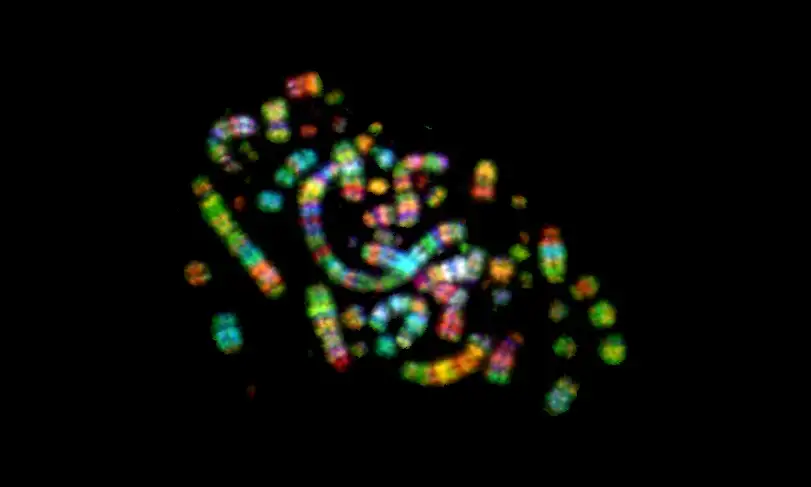
CENTREFOLD
Rod Downey
NEW COLLEAGUES
FEATURES
BOOK REVIEWS
CONFERENCES
NOTICES
Application for Membership of the NZMS

MATHEMATICAL MINIATURE 24 Blowing our own Google; Dynamical Systems and Numerical Analysis

ISSN 0110-0025

PUBLISHER'S NOTICE

This newsletter is the official organ of the New Zealand Mathematical Society Inc. This issue was assembled and printed at Massey University. The official address of the Society is:

The New Zealand Mathematical Society,
c/- The Royal Society of New Zealand,
P.O. Box 598, Wellington, New Zealand.

However, correspondence should normally be sent to the Secretary:

Dr Shaun Hendy
Industrial Research Limited
Gracefield Research Centre
P O Box 31310, Lower Hutt
s.hendy@irl.cri.nz


NZMS Council and Officers

  President Associate Professor Mick Roberts (Massey University, Albany)
  Outcoming Vice President Professor Rod Downey (Victoria University)
  Secretary Dr Shaun Hendy (Industrial Research Limited, Lower Hutt)
  Treasurer Dr Tammy Smith (Massey University, Palmerston North)
  Councillors Dr Michael Albert (University of Otago), to 2006
Dr Shaun Hendy (Industrial Research Limited), to 2004
Professor Gaven Martin (The University of Auckland), to 2005
Dr Warren Moors (The University of Auckland), to 2006
Dr Charles Semple (University of Canterbury), to 2005
Dr Tammy Smith (Massey University, Palmerston North), to 2005
Professor Geoff Whittle (Victoria University), to 2004
  Membership Secretary Dr John Shanks (University or Otago)
  Newsletter Editor Professor Robert McLachlan (Massey University, Palmerston North)
  Legal Adviser Dr Peter Renaud (University of Canterbury)
  Archivist Emeritus Professor John Harper (Victoria University)
  Visitor Liaison Dr Stephen Joe (University of Waikato)
  Publications Convenor Dr David McIntyre (University of Auckland)
  Webmaster Dr Stephen Joe (University of Waikato)

Newsletter Correspondents

  Sub-Editors  
  Book reviews Mr David Alcorn (University of Auckland)
  Conferences Dr Michael Carter (Massey University)
  Mathematical Miniatures Emeritus Professor John Butcher (University of Auckland)
 
Honorary Correspondents
 
  Murray Black

Mathematics (Auckland University of Technology)

  Michael Doherty Statistics NZ (Wellington)
  Lenette Grant Mathematics and Statistics (University of Otago)
  David Harte Statistics and Operations Research (Victoria University)
  Shaun Hendy Industrial Research Ltd (Lower Hutt)
  Stephen Joe Mathematics (University of Waikato)
  Geoff Jones Statistics (Massey University)
  Ken Louie AgResearch (Ruakura)
  Mark McGuinness Mathematics (Victoria University)
  Judi McWhirter Statistics (University of Waikato)
  Donald Nield Engineering Science (University of Auckland)
  Aroon Parshotam Landcare (Palmerston North)
  Charles Semple Mathematics (University of Canterbury)
  Winston Sweatman Mathematics (Massey University, Albany)
  Garry Tee Mathematics (University of Auckland)
  Wynand Verwoerd Mathematics and Statistics (Lincoln University)
  Marijcke Vlieg-Hulstman Mathematics (Massey University, Palmerston North)

Web Sites

The homepage of the New Zealand Mathematical Society with URL address:
http://www.math.waikato.ac.nz/NZMS/NZMS.html (Webmaster: stephenj@math.waikato.ac.nz)
The newsletter is available at: http://IFS.massey.ac.nz/mathnews/NZMSnews.shtml
Editorial enquiries and items for submission to this journal should be submitted as text or files to r.mclachlan@massey.ac.nz

EDITORIAL

WORRY, BUT DON'T PANIC

In an article titled "The global brain drain" in the NZ Education Review for 9 June 2004, Jacqueline Rowarth (postgraduate dean and director of research at Unitec) looks at science education in New Zealand, describing the huge demand for scientists overseas and how we must all (ministers, academics, and scientists) work to increase participation in science.

It is a familiar refrain, and our concerns are made even more immediate in the current climate in which we live and die by our year-to-year enrolments. Here's another version from 7 July: "Australia's mathematics capability is in steep decline... The numbers of honours graduates in maths and stats from 1997 to 2001 was three-quarters of that in the previous 5 years" (NZER, quoting Peter Hall in the July Australasian Science). A common response to local worries is that the downturn in science is a worldwide phenomenon, a response which, even if true, makes the task of organizing a local response seem much harder. On the other hand, the opposite point of view, "Numbers of Mathematics Graduates Static" (which is in fact the content of this editorial) sounds like a entry for the most boring headline of all time.

Unfortunately the whole field seems to be plagued with anecdotal evidence and unreliable data. Even when good data has been collected, as for Australian honours graduates, it can be misused: apart from the 3 years 1992–1994, when numbers were unusually high, numbers have in fact been roughly static since the early 1970s, while maths PhDs are sharply up in the last 10 years.1

Here are the data I have managed to collect. While inconclusive, they do not indicate, to me at least, that we are in an abnormal crisis.

My immediate concern was whether there has been any collapse in the numbers of students doing mathematics degrees in New Zealand. In 1996 Jeff Hunter chaired a panel which produced the major study "Mathematics in New Zealand: Past, Present, and Future", commenting that "The disturbing feature is the lack of growth in student numbers, despite the increases in overall university enrolments". Wondering about more recent trends, I asked him to update the data and he produced the following graph.2

To me this graph displays a striking lack of trend, considering the long time series and the huge changes in New Zealand's education scene over the past 30 years. On the other hand, the average number of bachelor's and honour's graduates is 263 per year, or (recently) 66 per million of population.

(There is, however, a worrying drop in statistics graduates in 2001 and 2003. When does a fluctuation become a trend?)

It is equally striking that we haven't captured any of the growth that has taken place in population or in tertiary participation. Numbers of graduates in computer and information science have mushroomed, from 269 in 2001 to 968 in 2003.

Still, lately about 1.8% of all bachelors' and honours' degrees have been in mathematics, which is quite respectable by world standards. In the United States, numbers of maths graduates declined from a peak of 15,600 in 1987 to about 11,300 in 2000, a decline from 64 to 40 per million population, or from 1.5% to less than 1% of all bachelors' degrees. (Even more striking, NZ is now producing 242 computing sciences degrees per million population per year, while the USA produces only 117.)3

The UK is often considered to be a bastion of higher education, especially in traditional subjects like mathematics. The just-issued International Review of Mathematics in the UK (http://www.cms.ac.uk/irm) comments

"Remarkably, UK mathematics is not suffering from a decline in undergraduate students. Compared to the world, in particular the US and continental Europe, undergraduate enrolment levels are high and have remained more or less constant. There is also a widespread feeling that studying mathematics is a good path to a non-academic career, e.g. in finance or industry."

—but don't provide any data. However, in 2000 the UK produced just 3274 maths bachelors. That is 1.67% of all bachelors' degrees and 56 per million of population. In those terms, we are not out of line.4

I have also heard comments that science as a whole is unpopular in New Zealand. Is that really true? In the NZVCC's 2003 report, there are 17379 bachelors' degrees awarded, of which 4000 (or 23%) were in science. (6.5% were international students, but these are not broken down by subject.) This is actually an improvement from the 20% recorded in 1996, but is still slightly behind the OECD average of 26%, and markedly behind some countries like the UK and Finland (nearer 40%). On the other hand, tertiary participation rates confound some of these figures. The NSF has compiled figures in its report Science and Engineering Indicators 2002 comparing the number of 24 year olds who have a first degree in science or engineering in different countries. In 1999, the figure for New Zealand is 5.4% which is well behind the UK and Finland (10%), most other European countries (around 7%), and even the USA (6%). So for science as a whole we do seem to be slightly behind—but nor are we in a state of collapse.

Strangely, even now I have collected and attempted to review this data, I still don't feel particularly reassured. I still believe that a mathematics degree would be useful to more people than are currently getting one, and I am still swayed both by press releases like those by Jacqueline Rowarth and Peter Hall, and by stories about how employers in the UK and Germany, say, will eagerly consider mathematics graduates for jobs in finance, technology, and computing. As usual, further research is needed.

Robert McLachlan
Massey University

1 November 2003 AusMS Gazette or web site.
2 The data have originated with the Ministry of Education prior to 1990 and with the NZVCC from 1991, from their "University Graduate Destinations" booklet. Unfortunately they did not produce a report in 2002 so there is one year of missing data. The data may be unreliable, and the merging of maths and OR confuses the picture. Even in the US, a recent article in the Notices of the AMS notes large discrepancies between three studies of numbers of mathematics graduates.
3 F. M. Goodchild, The pipeline: Still leaking, American Scientist 92, pp. 112-114. These maths grads were taught by, in 1996, 16,700 tenure and tenure-track faculty, plus innumerable fixed-term instructors and T.A.'s.
4 Again, I found it hard to get clear figures for the UK. Maths participation may be higher in the traditional universities: in 1994, prior to the UK polytechs being made into universities, 2.7% of all university students declared mathematics as their subject of study.

PRESIDENT’S COLUMN

A few weeks' ago I was standing in Blackwell's bookshop in Oxford. I had bought a volume on partial differential equations, but could anticipate my attention wavering during the later stages of the flight back home. The 'three for the price of two' section is a great institution and contained several popular science titles, including Bill Bryson's 'A short history of nearly everything' (Transworld 2003). I was also intrigued by a book written for teenagers: 'The curious incident of the dog in the night-time' by Mark Haddon (David Fickling Books 2003). Bill Bryson believes that equations reduce the sales potential of books, I'm sure there are frequent misquotations about that around. He says in a footnote that "it remains an amazement that anyone seeing 1.4 x 10⁹ km3 would know at once that it signifies 1.4 billion cubic kilometers." I don't see the problem in envisaging a cube with each side 1000 km and billions always confuse me, maybe that's why I don't write bestsellers.

Christopher, the narrator of 'the dog in the night-time' thinks differently, so differently that he attends a special school. The chapter numbers are all primes, Christopher likes primes and claims to know them all up to 7,507. It also gives the impression of getting through a book faster when Chapter 13 is followed by Chapter 17. When Christopher wants to relax he solves quadratic equations in his head or recites the cubes of the cardinal numbers in order. His ambition is to take A level mathematics, and then go to university and become a scientist. Noticing that the number of frogs in the school pond appears to fluctuate randomly, Christopher writes down a discrete logistic equation and describes the dependence of long term behaviour on the distinguished parameter. His take on chaotic population dynamics is that "sometimes, a whole population of frogs, or worms, or people, can die for no reason whatsoever, just because that is the way the numbers work." The book contains numerous diagrams, graphs and equations, but the only theorem is consigned to an appendix with its proof. Despite all this, the narration style is easy and the story is accessible and pitched at a suitable level for a teenage audience. It was awarded the Booktrust Teenage Fiction Award in 2003.

It is always a pleasure to congratulate members of the society for significant achievements, but it carries with it the danger that I get something wrong or leave someone out. To set the record straight, Charles Pearce FNZMS is now the "Elder Professor of Applied Mathematics" at the University of Adelaide. My apologies to Charles for my inaccuracy in the last issue. I also overlooked that the 2003 Hatherton Award for the best scientific paper by a PhD student at any New Zealand university in physical sciences, earth sciences, and mathematical and information sciences was awarded to Dr Guohua Wu, now a post-doctoral fellow at Victoria University of Wellington. The award is for his contribution as senior author to the paper "Isolation and lattice embeddings", published in the Journal of Symbolic logic.

Finally, it gives me pleasure to announce that the New Zealand Mathematical Society's award for Mathematical Research in 2004 goes to Associate Professor Eamonn O'Brien of The University of Auckland. Eamonn was cited for his "outstanding achievements in using computation, backed up by deep algebraic theory, to solve long-standing and difficult problems in group theory."

Mick Roberts
Massey University, Auckland

LOCAL NEWS

AGRESEARCH

The Mathematical Biology team have a new PhD student who started in May. Shawn Harrison joins us from the University of Utah, Salt Lake City, where he recently completed his MSc in Mathematical Biology under the guidance of James Keener. Shawn will be working on a problem initiated with the Liggins Institute and The University of Auckland and thus has a team of advisors: Peter Lobie (Liggins Inst), Tanya Soboleva (AgResearch) and James Sneyd (The University of Auckland). This is to do with modelling signal transduction pathways, in particular examining the dynamics behind pharmacological and hormonal factors impinging on the ability of Growth Hormone (GH) to stimulate STAT5-dependent growth. Outside the office, Shawn enjoys cycling, hiking and communing with nature.

Stathie Triadis has left the Mathematical Biology group to return to fulltime studies at Waikato University. He will be completing a postgraduate Diploma in Computer Science and we wish him well for the future.

Ken Louie

THE UNIVERSITY OF AUCKLAND

Department of Computer Science

Bakh Khoussainov has been promoted to a Personal Chair.

Some senior members of the Department are retiring: Peter Fenwick, Peter Gibbons and Jennifer Lennon.

Mike Barley was Chairman of the workshop on Safety and Security in Multi-Agent Systems (SASEMAS 04), which was part of the conference on Autonomous Agents and Multi-Agent Systems (AAMAS), held at Columbia University in July. In August he was Chairman of the Pacific Rim International Workshop on Multi-Agent Systems (PRIMA 04), which was part of the Pacific Rim International Conference on Aretificial Intelligence (PRICAI), held at The University of Auckland in August 2004.

Hans Guesgen was the Programme Chair for PRCAI, at The University of Auckland in August 2004.

The Department now has more Master students than the School of Biological Sciences, making it the largest Master students group in the Faculty of Science.

Seminars

Michel Deza (ENS/CNRS, Paris & ISM, Tokyo), "Zig-zag structure of simple polyhedra."

Professor Cris Calude, "From uncertainty to incompleteness via randomness."

Professor Bob Doran, "Project Whirlwind movie (1953)—NZ premiere."

Professor Eric Goles (CONICYT, Chile), "Complexity of some 2-dimensional cellular automata."

Santokh Singh, "Aspect-oriented component engineering for web services."

Jasvir Nagra & Professor Clark Thomborson, "New techniques for software protection."

Professor Michael Twidale (University of Illinois at Urbana-Champaign), "Windows versus Whiteboards: talking about interfaces."

Dr Craig Nevill-Manning (Director of New York Engineering for Google), "Finding needles in a 20 TB haystack, 200 million times per day."

Michael Goebel, "Ensemble learning by data re-sampling."

Dr Susan Dray (Dray & Associates, Inc.), "Practicing theories: lessons from the Tablet PC field trials."

Mr Simon Phipps (Sun Microsystems), "Waves of change, rivers of freedom."

Dr Graham Farr (Monash University), "Cost-effectiveness of algorithms."

Garry J. Tee

Department of Mathematics

In July 2004, Gaven Martin was elected to the council of the RSNZ.

Bruce Calvert visited the University of Nevada at Reno, where he worked with Chaitan Gupta on boundary-value problems for o.d.e.s, getting unqiueness as well as existence results. He then visited the University of Bucharest where he worked with Cornelia Marinov, on the dynamical system given by Lazzaro's Winner-take-all circuit, which uses metal-oxide semiconductors.

Gaven Martin was a Research Fellow at the Institute Mittag-Leffler in November and December 2003. In 2004 he attended the Summer School at Nelson in January, and he was a visiting Professor at Syracuse University in March, with a short visit to Cornell University. He was a visiting Professor at University of Michigan in May, and a Visiting Professor at UCLA in July.

Mike Meylan visited Professor Sakai at Iwate University. They are developing a computer model for the wave scattering by multiple thin plates, which they are testing against the experiments which Sakai is performing in his wave flume (using polystyrene in place of ice).

Geoff Nicholls took up a 3-month visiting Associate Professorship with the Department of Mathematical Sciences at the University of Aalborg in Denmark. He worked on a solution to the initialization bias problem present in Monte-Carlo algorithms. Then he gave a series of classes at a workshop on Inverse Problems in Finland, as well as a couple of invited lectures in the UK, one at an LMS Durham symposium on Mathematical Genetics, and another at a meeting in Cambridge on Glottochronology (the study of dating changes in language).

Ivan Reilly spent a month at the University of Burgundy - Dijon, sponsored by the French Embassy in Wellington.

Josef Siran visited Professor Devid Surowski, currently located at Shanghai American School, in April 2004. They worked on classification of nonorientable regular maps with automorphism groups PSL(2,p), and were able to make substantial progress. He was an invited speaker on "Vertex-transitive maps" at the Czech and Slovak International Conference in Graph Theory, which took place in Vysne Ruzbachy, Slovakia in May. He was an organizer of the Workshop in Topological Design Theory, which took place at the Slovak University of Technology, Bratislava, Slovakia in June.

As part of the NZIMA thematic programme on numerical differential equations, a workshop on Computational Partial and Ordinary Differential Equations was held at The University of Auckland, 21–23 April 2004 and organized by John Butcher and Helmut Podhaisky. The invited speakers were Michael Baines (University of Reading), Igor Boglaev, (Massey University) Joseph Flaherty (Rensselaer Polytechnic Institute, USA) and Zahari Zlatev (National Environmental Research Institute, Denmark), each of whom presented a short series of lectures. In addition there were 10 additional speakers and a total of 32 participants.

On 12–16 July 2004 The University of Auckland hosted the Workshop on Combinatorics and its Applications, organised by Paul Bonnington and sponsored by NZIMA. This was an introductory workshop on several key topics in the 6-month NZIMA thematic programme in Combinatorics and its Applications. Each of the six invited speakers gave a series of 3–5 lectures on a particular topic:

Rod Downey (VUW) on Algorithmic Randomness,

James Oxley (Louisiana State University) on Matroid Theory,

Bruce Richter (University of Waterloo) on Graph Minors and Well Quasi-Ordering,

Gordon Royle (UWA) on Algebraic Combinatorics,

David Ryan on Combinatorial Optimization,

Jozef Siran on Symmetries in Graph Embeddings.

One of the main goals was to attract those researchers and students wishing to become more familiar with these important emerging areas in Combinatorics and its Applications. The workshop included informal discussions and plenty of time for collaborative research. Thanks to the very generous support of NZIMA there was no registration fee and free backpacker-style accommodation. With attendance about 25, the workshop was highly succesful.

Brian van Dam has completed his PhD; with his thesis on "Construction of topological spaces via resolutions."

Recent visitors include: Carlos Perez (Universidad de Las Palmas de Gran Canari), Dr Larry Peterson (University of North Dakota), Professor Bruce Richter (University of Waterloo), Adam Szereszewski (Warsaw University) and Professor Xinyuan Wu (Nanjing University).

Seminars

Simon Marshall, "Rankings of multisets and discrete cones."

Nodira Khoussainova, "Determinization of Buchi-automata: Safra's construction."

Professor Marston Conder, "Compact hyperbolic 4-manifolds of small volume."

Professor Paul Fong, "Dade's conjecture for finite reductive groups."

Richard Lundgren, "Variations on Interval Graphs."

Professor Douglas Lind, "A gentle introduction to algebraic dynamics."

Professor Mike F. Newman (ANU), "Classifying p-groups by coclass."

Kirsi Peltonen, "Finsler Geometry: Convenient framework for applications containing infinitesimal Banach space structure."

Professor Richard S. Laugesen, "How to say 'subsolution' with the maximum principle," and "Wavelet type spanning sets for Lp and Sobolev space."

Professor Hershel Farkas (Hebrew University of Jerusalem), "Theta functions: conformal mapping through combinatorial number theory."

Vadim Kuznetsov, "Jack polynomials: integral equation, representation and factorization."

Tran Thanh Tam, "Pricing electricity derivative using price duration curve."

Professor David Gauld, "An introduction to convergence spaces."

Shan-I Lee, "Calculating the Alexander polynomial from the Dowker sequence."

Dr Ji-ling Cao, "Barely Baire spaces and a problem of McCoy."

Professor Robert Raphael, "A functor on Tychonof spaces."

Professor Valentin Gutev, "Selections and their applications."

Associate Professor Chris Triggs (Statistics), "Probability and statistics in forensic science."

Associate Professor Jozef Siran, "Regular maps on nonorientable surfaces."

Professor Boris Pavlov, "Analytic perturbation theory on continuous spectrum revisited: Intermediate operator (observation on the Friedrich's model)."

Brian van Dam, "A thesis resolved: resolutions, their properties and use towards manifolds and Dowker spaces."

Professor Peter Nyikos, "A strong separation property," "Cardinal restrictions on some homogeneous compacta," "Elbow room in Hilbert space and other Banach spaces," and "Spaces of continuous functions on subsets of the real line."

Krasimira Tsaneva-Atanasova (2 seminars), "Synchronisation of calcium oscillations in a pancreatic acinus."

Greg Ewing, "Inferring migration rates from DNA sequence data using reversible-jump MCMC."

Dr Bart Oldeman, "The saddle-node Hopf bifurcation with global reinjection."

Dr Ruhama Even, "The preparation of providers of professional development for teachers of mathematics."

Professor Grant Woods, "Using group 'research projects' in the teaching of introductory calculus."

Professor David A. Smith, "Reusable tools for creating interactive online learning environments."

Dr Melissa Rodd, "Ways ahead: successful mathematics students at two universities."

Dr Wiremu Solomon, "Teaching Maths 101 via Multi-Videoconferencing to Kura Kaupapa Maths Teachers."

Jessica Utts (University of California—Davis), "Investigating psychic phenomena with statistics," and "Principles and practices for teaching statistics."

Garry J. Tee

Department of Statistics

Keith Worsley has been awarded a Gold Medal by the Statistical Society of Canada, for his outstanding contributions to statistics.

The Department is in the process of appointing two professors. Dr Sam Ferreira, from the Department of Conservation, has joined us as a postdoctoral fellow, working on ecological modelling of metapopulations.

Recent visitors include: Mayasuki Jimichi (Kwansei Gakuin University, Japan, 2003–9–9 to 2004–10–1, Jeong Hwan Ko (Andong National University, South Korea) 2004–1–23 to 2005–1–10, Claude Belisle (Laval University, Canada) 2004–7–1 to 2004–12–31, Jessica Utts (university of California—Davis), 2004–7–1 to 2004–7–8.

Seminars

Dr Ray Hoare (Hoare Software), "Presentation of Statistica software package."

Dr Anna Bogolmonaia, "A new solution to the random assignment problem."

Professor Colin Aitken, "Evaluation of forensic trace evidence in the form of multivariate data."

Michael Bulmer, "Virtual worlds for teaching mathematics and statistics."

Mark Maunder, "Ecological modelling: information and uncertainty."

Dr Sam Ferreira (joint seminar with Department of Mathematics), "Metapopulations: scaling African conservation challenges."

Garry J. Tee

UNIVERSITY OF CANTERBURY

Department of Mathematics and Statistics

In July, Rick Beatson gave an invited lecture at the conference on Mathematical Methods for Curves and Surfaces in Tromso, Norway. The conference was great and the scenery fantastic.

Mike Steel has been around the world a few times recently as part of his NZIMA Maclauren fellowship. In recent months he has given talks and worked with colleagues at UC Berkeley, UC Davis, the Max Plank Institute for Mathematics in the Sciences in Germany, and has attended workshops and conferences in Sweden, Colorado, Chicago, Germany, California and China. A number of visitors will visit University of Canterbury as part of this fellowship, starting with Dr Laszlo Szekely who is visiting during July and August.

Seminars

Beverley Horn, "Optimisation of the decompression of divers."

Professor Richard Laugesen (University of Illinois), "Sampling in Lebesgue and Sobolev spaces."

Professor Estate Khmaladze (Victoria University of Wellington), "Theory of large number of rare events and estimation of abundancies."

Bernie Tsang, "Modelling of the mechanisms governing crimp in wool."

Dr Gabi Popa, "A quintessence of a PhD Thesis."

Professor V.S. Sunder (The Institute of Mathematical Sciences, Chennai), "Unitary invariants of tensors."

Suruj Seunarine, "The decay of an unstable Universe; should we be worried?"

Philip Daniel, "Some supertree algorithms."

Dr Siva Ganesh (Massey University), "Data mining in practice."

Leng Leng Lim (Massey University), "Modelling of volcanic ashfall."

Melissa Ziegler (University of Pittsburg), "Variable selection when confronted with missing data."

Dr Barbara Holland (Massey University), "An overview of phylogenetic methods."

Gabriela Czanner (University of Pittsburg), "Applications of statistics in neuroscience."

Professor Satish Iyengar, "Data with a bias."

Ulises Carcamo, "Mathematics applied to finance: regularities in the VIX and the distribution of option's payoff."

Dr Michael Plank, "Heart disease and calcium signalling in endothelial cells."

Professor Peter Robinson (London School of Economics), "Efficiency improvement in inference on stationary and nonstationary fractional time series."

Willy Hereman (Colorado School of Mines Golden), "Continuous and discrete homotopy operators with applications in integrability testing of nonlinear PDEs and lattices."

Charles Semple

INDUSTRIAL RESEARCH LIMITED

Applied Mathematics Team

Applied Maths had a very successful FRST bidding round this year. Shaun Hendy, Steve White and Roger Young were PIs on a successful NERF proposal "Multiscale Modelling" which was funded for 6 years. This programme aims to develop multiscale modelling tools for describing the fabrication and properties of nanostructures. Most of these tools will involve coupling atomic-scale processes to mesoscale or macroscale material models. Graham Weir, John Burnell and Shaun Hendy were PIs on another successful NERF proposal "Nanoactive Microfluidics" which was funded for four years. This project will involve modelling microfluidic devices and new nanostructured surfaces that can control flows with switchable hydrophobicity. Applied Maths staff are also involved in a number of new other projects including "Augmented Humans" (Kit Whithers, Robin Willink), "Chiranz" (Steve White) and "Dental and Medical Imaging" (Roger Young). We will all sleep a little more soundly for the next few years.

The new programmes have brought some new staff members. Dr Tim Cooper (modelling surfaces with switchable hydrophobicity) and Dr Aruna Awasthi (multiscale modelling of nanostructures) have taken up post-doctoral fellowships in the Applied Maths Team. Also Peter Zoontjens will be doing his PhD with Shaun Hendy on developing a hybrid molcular dynamics/kinetic monte carlo algorithm for modelling sintering processes in metals.

Warwick Kissling helped organise the annual conference of the Royal Astronomical Society of New Zealand this year. It was held in early July at the NZ International Campus in Silverstream, Upper Hutt and featured a number of interesting speakers, including Warwick ("Computer controlled polishing of mirrors") and Prof Elaine Sadler from Sydney ("The Life History of Galaxies and Black Holes").

Shaun Hendy visited the Mathematics Department at the University of Tennessee in Knoxville for a week in June to work with Dr Tim Schulze on the multiscale modelling of nanowires. Shaun also stopped by Cambridge and Imperial College in the UK, squeezing in a morning at the Natural History Museum in London to watch the Transit of Venus. Shaun is continuing with his fractional appointment in the School of Chemical and Physical Sciences at Victoria, and has now developed a new honours course in Computational Physics and is helping put together a new first-year course in Nanotechnology.

Finally John Burnell has been acting as an expert witness in a High Court case, providing evidence on the Wairakei geothermal field.

Shaun Hendy

MASSEY UNIVERSITY

Institute of Fundamental Sciences (Palmerston North)

Mathematics

It is congratulations time and in chronological order our congratulations to:

  • Bruce, Charles and Igor who were all presented in March with the 2003 Distinguished Teaching Award for their outstanding efforts in 300 level.
  • Padma Senarath who successfully defended her PhD thesis: "Differential geometry of projectively related Finsler Spaces."
  • Seung Hee Joo who successfully defended her PhD thesis: "Contact systems and contact integrators."
  • Tammy Smith for securing a Massey University award: "Fund for Innovation and Excellence in Teaching" for the project "Developing MathsFirst: A web-based system to enhance first year mathematics teaching and learning." Other participants in this project are Kee Teo, Bob Richardson and Judy Edwards.
  • Robert McLachlan on the award of the New Zealand Institute of Mathematics and its Applications (NZIMA) Maclaurin Fellowship. This has a value of $159,000 and will allow Robert to undertake research full time for the 2005 calendar year. He expects to spend three months in Melbourne but will otherwise be based in Palmerston North.
  • Robert and Fiona on the birth of their daughter (Willa, 3.8 kg). Robert advises that this name was the name discussed prior to the birth! A little sister for Helena. Everyone is well.

Igor Boglaev, Brett Ryland and Matthew Hardy attended the "Workshop on computational partial and ordinary differential equations" held from 21–23 April 2004 at The University of Auckland. Igor spoke about "Physically motivated domain decomposition for singularly perturbed equations," Brett about "Multisymplectic methods" and Matthew about "Boundary layers in high speed gas flows."

Igor also set off to Europe for a few weeks. Firstly he attended The 6th International Meeting on High Performance Computing for Computational Science (VECPAR 2004) held at the Universidad Politecnica de Valencia, Valencia in Spain held from 26–30 June 2004, and gave a paper: "Parallel Monotone Algorithm for Nonlinear Parabolic Reaction-Diffusion Problem." Then he crossed The Pyrenees (but not by bike as the Tour de France had not started yet) to Toulouse (France). Here Igor attended An International Conference on Boundary and Interior Layers (BAIL 2004), ONERA, 5–10 July 2004, where he talked about "Monotone Multidomain Decomposition Algorithm for Nonlinear Singular Perturbation Problem."

We said farewell to Jonathan Marshall who left for the United Kingdom late May. We wish him all the best on his travel and future employment. We will certainly miss his input into the mathematics discipline!

Robert McKibbin was supposed to have delivered his inaugural lecture on the 15th of July here on the Turitea Campus (PN) but the heavens descended upon earth and deposited a thick layer of dense fog upon Auckland Airport and surroundings. Ergo, the lecture vanished into thin (thick) air and will hopefully be delivered at some other time.

And of course on this day Bruce van-Brunt had booked a flight to Auckland. He had to catch an early flight to Sydney next morning. After some anxious hours of wondering how to get to Auckland, the fog lifted and he could breathe again when he heard that his flight to Auckland had been unaffected. From Sydney, Bruce flew to Canada where he attended the International Conference on Differential Equations and Applications in Mathematical Biology, held at Malaspina University College, Nanaimo, British Columbia, Canada, July 18–23, 2004. Bruce gave a talk about "Holomorphic Solutions to Linear Functional Differential Equations." The conference must have been a 'stunning' success as apparently nobody had felt the earthquake on Vancouver Island during that week.

We welcome Matt Perlmutter back in his new position as Lecturer. Matt held a Postdoctoral Fellowship with Robert McLachlan a few years ago.

Brett Ryland, Robert McLachlan and Matt Perlmutter intend to parcipitate in the Thematic Programme on Dynamical Systems and Numerical Analyses, held in Raglan, 30 August–3 September, hosted by The New Zealand Institute of Mathematics & its Applications.

Allan Wilson Centre:
Professor Tom LoFaro, of the Department of Mathematics and Computer Science at Gustavus Adolphus College, Saint Peter, Minnesota, is visiting as a sabbatical visitor for the remainder of the year. Tom's research interests include non-linear dynamical systems and their applications to mathematical biology. In particular he is investigating the evolutionary dynamics of the spread of a rare allele when the population's dynamics are periodic or non-periodic. He is also undertaking some teaching within the Institute while Robert McLachlan is on parental leave. Tom is accompanied by his wife and young family.

HELIX, our high performance computer is currently approaching saturation, as we share access with other users with serious computational research. Massey has just approved the purchase of an additional 40 processors (all 64-bit chips) bringing the system up to 46 64-bit processors combined with the original 132 32-bit processors. The cluster is housed at our Albany campus, and maintained by the computer scientists of IIMS. It is available for external research users, contact Mike Hendy (m.hendy@massey.ac.nz) for details.

Various IFS members of the Allan Wilson Centre have just returned from their "conference season" travels. Barbara Holland presented talks at the "Evolution" meeting at Fort Collins, Colorado (1300 participants!) and the Phylogenetic Combinatorics and Applications (PCA) workshop in Uppsala. Michael Woodhams also attended PCA, and then presented a paper on his "QAML algorithm approximating maximum likelihood for phylogenetics," to the European Conference on Computational Biology in Glasgow (fewer than 20% of papers were selected for presentation). Bhalchandra Thatte presented his "multiple sequence alignment program MANTRA" to the 15th Australasian Workshop on Combinatorial Algorithms (in celebration of Professor Jennifer Seberry's 60th Birthday) at Ballina Beach, NSW. Tim White, who is just commencing his PhD studies, also crossed the Tasman, to participate in an AMSI winter school on Mathematics and Computational Biology in Brisbane.

Seminars

Dr Stephen Marsland (IIST, Massey University at Palmerston North), "Diffeomorphic image warping and the non-rigid registration of medical images."

Dr Barbara Holland, "From gene trees to species trees."

Professor Willy Hereman (Department of Mathematical and Computer Sciences, Colorado School of Mines, USA), "Continuous and discrete homotopy operators with applications in integrabilty testing of nonlinear PDE's and lattices."

Associate Professor Mick Roberts (IIMS, Massey University at Albany), "Modelling strategies for minimizing the impact of an imported exotic infection."

Professor Thomas LoFaro (Gustavius Adolphus College, St. Peter, Minnesota), "Adaptation vs migration in demographically unstable populations."

Marijcke Vlieg-Hulstman

Institute of Information and Mathematical Sciences (Albany)

Congratulations to Mick Roberts, who has been awarded a Christensen Fellowship at St Catherine's College in Oxford for the Michaelmas term, 2005. He will spend it working with the epidemiology group which is based in the zoology department, in particular with Dr Angela McLean. They will address some dynamical systems problems arising from the evolution of infectious diseases.

We also congratulate Galkadowite Senaratne (Sena), who has been awarded a TIF (Technology in Industry Fellowship) and who has also been appointed as a Graduate Assistant in Computer Engineering while he studies for his PhD with supervisors Graeme Wake, Rick Keam (Keam Holden Associates Ltd.), and Winston Sweatman.

Shaun Cooper was awarded one of the inaugural IIMS teaching awards to recognise consistent high-quality teaching. He was presented with his award on 23 March by the Massey University Albany Deputy Vice Chancellor, Professor Ian Watson.

Winston Sweatman has been elected an individual member of the International Astronomical Union. This is the worldwide professional body for the Astronomical Sciences. He is specifically a member of the IAU Commission 7: Celestial Mechanics and Dynamical Astronomy.

Robert McKibbin presented the initial stage of a Mathematics-in-Industry initiative in Thailand, arising from a request to the Centre for Mathematics in Industry within IIMS. He presented lectures on mathematical modelling and industrial mathematics over two days at Chulalongkorn University, Bangkok, and also facilitated two MISG-style workshops over two days at Chiangmai University in Northern Thailand. Graeme Wake is to follow up with the second stage of the initiative in October.

Robert was also an invited speaker at the Thailand National Mathematics Conference in Chiangmai where he delivered a talk on "The distribution of particles by the atmosphere". From there he went to Japan to spend one week in research collaboration with Shigeo Kimura, Professor of Mechanical Engineering at Kanazawa University.

In a warmer vein, Robert McKibbin spent a too-short two days in Samoa, as part of a panel interviewing candidates for promotion to professorial positions at the National University of Samoa.

Mick Roberts attended the combined 3rd Conference on Deterministic and Stochastic Models for Biological Interactions (DeStoBio) and 7th Conference on Mathematical Population Dynamics (MPD) at Trento in Italy, presenting one paper and as co-author of another. He then spent a week with the Oxford epidemiology group laying the foundations for a joint research programme and presenting a seminar.

Graeme Wake visited the University of Sydney in late June-early July . He and Mick Roberts are members of the MBN (Mathematical Biology Network), an Australian version of our COREs. In between meetings with potential Australian industrial presenters at MISG2005 (to be held in Auckland), he gave an Applied Mathematics seminar entitled "Modelling of Cancer Treatment".

Graeme Wake also departs late July for his next period as Visiting Professor in KAIST, Daejeon to teach a block postgraduate course (3 weeks) in Applied Mathematics, and to co-Direct the Korean Industrial Mathematics Initiative 2004 in late August. These meetings are a pre-cursor to MISG-type activity. He is an invited speaker at the Korean Applied Mathematics Forum in Gyeongju in mid-August and will be a participant (in Korea only) with the North-Asian NZ Science Delegation led by Peter Hodgson, Minister of RST, also in mid-August. Mark McGuiness (VUW) is also part of this Visiting Team in KAIST. En-route to Korea Graeme will speak at the National University of Singapore.

The 3rd of June saw the first Get-Together of Data Miners on the Albany Campus. Four university and four business speakers presented an exciting range of talks for a packed QA1 lecture theatre. The Get-Together was followed by a workshop for Vero Insurance and Fisher & Paykel on 30th June and preceded by data mining workshops for Hort Research and the IRD in March and April. Future plans include another workshop in Wellington later in the year and a seminar entitled 'Data Mining @ Monash: a collection of case studies and projects' to be presented by Kate Smith on 18th August. Kate is an Associate Professor, Deputy Head and Director of Research in the School of Business Systems at Monash University, Australia. In the meantime there are many requests for students trained in data mining. In desperation three Auckland businesses are advertising Work Placement Programmes for students. 'Our customers are screaming out for resources' says Melissa Cassar, Academic Program Manager SAS Australia & New Zealand.

Further on the horizon, for the start of next year we have the Mathematics-in-Industry Study Group MISG2005: January 24–28, 2005 directed by Graeme Wake (see http://misg2005.massey.ac.nz), and the International Workshop in Matrices and Statistics IWMS-2005: March 29- April 1, 2005 of which Jeff Hunter is Chair of the Local Organising Committee (see http://iwms2005.massey.ac.nz}.

We said farewell to Cynthia Wang who has taken up a postdoctoral research position at the University of Queensland working with Lutz Gross, who was an IIMS Mathematics staff member two years ago before leaving for Australia. We welcome our new arrivals Dr Beatrix Jones and Dr Danny Walsh, Lecturers in Statistics and Dr Mini Ghosh, postdoctoral fellow in Mathematics. Freda Anderson, recently from Unitech and the University of Auckland, has joined the IIMS team as Administrator.

Beatrix comes to us following a postdoctoral position at Duke University. Her PhD is from the University of Washington in Seattle, and her interests lie in applications of statistics to problems in genetics and ecology, especially those requiring stochastic computation for the evaluation of posterior probabilities/ likelihoods.

Daniel Walsh received a PhD in Statistics from the University of Washington in 2000. Subsequently, he was a postdoctoral researcher and a visiting lecturer at Penn State University for two years. He spent the last two years in North Carolina at SAMSI (Statistical and Applied Mathematical Sciences Institute) and NISS (National Institute of Statistical Sciences) as a postdoctoral fellow. His research interests are pattern recognition, spatial statistics and computer model evaluation.

Mini completed her PhD in January 2002 at the Department of Mathematics, IIT Kanpur (India). From March 2002 to March 2004, prior to coming to Massey, she worked as a postdoctoral fellow at the University of Trento, Italy. She is collaborating with Mick Roberts in the area of Epidemiological/Ecological Modelling.

Members of the Institute, recently met together in one of our regular pot luck dinner evenings. Those who were there had a great time, with a splendid selection of food dishes to sample.

Visitors

Geoff Aldis (ADFA, University of New South Wales) visited Mick Roberts in July.

Michael Hirschhorn (University of New South Wales, Australia) visited Shaun Cooper in July.

John Butcher (The University of Auckland) visited the Mathematics group in July.

Amos Gera from Israel is at IIMS for Semester Two.

Seminars

James Wallace (University of Bradford, England), "Statistical Modelling and Bootstrap."

David Munroe, "Proposals for increasing learning ability and reducing prior knowledge for Genetic Programming."

Geoff Jones (IIST, Massey University at Palmerston North), "Small-Area Estimation of Poverty and Malnutrition in Bangladesh."

Leng Leng Lim,"Modelling of Volcanic Ash Fall."

Edmund J Crampin (Bioengineering Institute, The University of Auckland), "Modelling biological pattern formation on growing domains."

Robert McKibbin, "Models, Chicks and Birds: Too Much Excitement for Mathematicians?"

Rua Murray (University of Waikato), "Variational Methods for Invariant Measure Approximation: Duality and Numerical Studies."

Carlo R. Laing, "Mode locking in a periodically forced 'ghostbursting' neuron."

Chris Bose (Department of Mathematics and Statistics, University of Victoria, Canada), "Variational Methods for Invariant Measure Approximation—Convergence Issues."

Heath James, "On Graphs: Perturbations and Small Worlds."

Jo Mann, "To Vaccinate or Not to Vaccinate?: That is the Question."

Mick Roberts, "Measles: A Mathematician on the Spot."

Paul Cowpertwait, "Point process modelling: A pointless exercise?"

Mini Ghosh, "Seasonal population dynamics of ticks, and its influence on infection transmission: a semi-discrete approach."

Satish Iyengar (Department of Mathematics and Statistics, University of Canterbury), "Diffusion Models for Neural Activity."

Marie Fitch, "NCEA—An overview."

Stephen Marsland (IIST, Massey University at Palmerston North), "Diffeomorphic Image Warping and the Non-Rigid Registration of Medical Images."

Winston Sweatman

UNIVERSITY OF OTAGO

Department of Mathematics and Statistics

John Clark attended the 4th China-Japan-Korea International Symposium on Ring Theory in Nanjing, China from 22–29 June. He gave a plenary talk at the Symposium. Austina Clark accompanied John on the trip and her Mandarin (her first language) was in great demand.

Derek Holton attended the 10th International Congress on Mathematical Education (ICME) in Copenhagen, Denmark from 4–11 July. As the conference covers all aspects of mathematical education from primary to tertiary, it necessarily attracts a large audience. The organisers of this year's ICME were disappointed that only 2,300 people attended.

A large number of activities were crammed into the 5.5 active days of the conference. There were eight plenary talks/panels; around 90 regular lectures; 29 topic study groups; 5 affiliated study group meetings; 12 small group activities; several national presentations; and numerous posters. My own interests centred around the topic study group on maths education at tertiary level. There we discussed such issues as the gap between secondary school and university; technology; teacher education; and methods of teaching. Apart from the material on the web site below, there is also to be a special issue of the International Journal of Mathematics Education in Science and Technology with extended papers from the conference. This should appear early in 2005.

But, as with most conferences, the most important parts of ICME-10 were lunchtime and the happy hour when there was a chance to speak with people on things of mutual interest. In addition the conference tour that I was on provided the opportunity to see the remnants of beautifully shaped Viking ships at Roskilde and to row and sail on their replicas. The crew of the boat that I was in was very reluctant to leave the boat. If you happen to be in the area, I thoroughly recommend a visit to the Viking museum.

For more details and outlines of various ICME presentations see www.icme-10.dk.

ICMEs take place every four years. The next one is to be held in Mexico in 2008.

International Science Festival. As part of the "Pathways to the Future" event on 8 and 9 July, the Department mounted a stand featuring lots of posters and Moebius strips, John Shanks' Mandelbrot animation and math software, and some videos on fractals and chaos. Being mainly visual, the display went down very well with kids and their parents who tried their hand. Many of the staff in the Department took turns at answering questions. It was hard to compete with whales and robots, but we held our own. The whole event, while hard work for the organisers, was a great success.

Gareth Hegarty and Tim Williams (PhD student) travelled to the ISOPE conference in Toulon, France, in May to present papers on wave scattering by ice floes and ice fields (respectively). Gareth left his Research Fellow position, working on Vernon Squire's Marsden project, on 30 June.

Bill Link (Patuxent Wildlife Research Center) visited to run a workshop 'Bayesian Methods in Statistical Ecology' with Richard Barker. He spent two weeks in the Department working with Richard on collaborative research.

Simon Nicol and Charles Todd visited from the Arthur Rylah Research Institute in Victoria, Australia, to work with Richard Barker on developing methods for monitoring the response of native fish to restoration of habitat in the Murray River.

Seminars

Mike Paulin (Zoology Department), "Neural Particle Filters for Non-linear State Estimation."

John Curran, "Automorphism groups."

Chris Hopkins (Scott Technology), "Meat the reel world—an introduction to a modern innovative engineering company."

Damien Mather (Department of Marketing), "Plato, Popper & Rasch: Future Heirloom Jewellery."

Roswitha Senske, "Evaluation of properties and performance of the truncated product method."

Robert Aldred, "I've been everywhere ... with cycles."

Peter Brook (Otago Polytechnic), "Confessions of an ex-Mathematician."

Annette Becher (Bioinformaticist, AgResearch, Invermay), "Multiple Alignments algorithms and applications."

Kevin McLeod (University of Wisconsin-Milwaukee), "MERLOT and Other Digital Libraries."

Kevin McLeod (University of Wisconsin-Milwaukee), "Quantum Mechanics in the Twentieth Century."

Tamsin Meaney (EARU), "The inequality of students' mathematical explanations and justifications."

Peter Johnstone (AgResearch, Invermay), "Density Estimates from Distance Sampling using Splines."

Matthew Schofield, "Modelling growth of adult Rangitikei River rainbow trout from mark recapture data."

Professor Frank Neubrander (Lousiana State University, William Evans Fellow), "The Laplace Transform: From Heaviside's Operational Calculus to Modern Applications."

Dr Mosaad Alabdullatif (King Saud University), "Highlights of Saudi Higher Education."

Professor Frank Neubrander (Lousiana State University, William Evans Fellow), "Interdisciplinary, Industrial, and Educational Outreach in Mathematics at Louisiana State University—A Case Study."

Jim Neyland (Victoria University), "JazzMaths: Putting Improvisation at the Heart of Maths Education."

Darryl MacKenzie (Proteus Wildlife Research Consultants), "Modelling co-occurrence patterns for species that are detected imperfectly."

Neil Watson (Canterbury University), "Weighted mean value properties for the Heat Equation."

Dr Chris Button (Director of the Human Performance Centre), "Data Collection and Analysis for Elite Human Performance."

Clinton Hayes (Statistics New Zealand), "Graduate recruitment programme."

StatChat

Laimonis Kavalieris, "Choosing the right wrong model."

Phil Battley, "Challenges in tracking the movements and demographics of migratory shorebirds."

Peter Robinson (London School of Economics), "Fractional Cointegration."

Dennis McCaughan, "p2: A magic number for number theory."

Lenette Grant

THE UNIVERSITY OF WAIKATO

Department of Mathematics

Congratulations are due to Alfred Sneyd on his recent promotion to the
rank of Professor. Alfred is the Convenor of the ANZIAM 2005 conference which will be held in Napier early next year. Preparations are well underway and a notice about this conference appears elsewhere in this Newsletter.

We also congratulate Sean Oughton and his partner Tracy on the birth of their daughter Maya Laura on 14 April. She weighed 4.1 kg or 9 pounds 1 ounce for those used to imperial measurements. Following a month of parental leave, Sean then attended the inaugural Asia-Oceania Geophysical Society conference in Singapore, where he gave invited talks on Solar Wind Turbulence and a Coronal Heating model. Immediately after that it was off to Switzerland for a productive week at the International Space Science Institute in Bern.

Besides Sean, there were a number of other travellers in the department. Kevin Broughan used his Claude McCarthy Fellowship to spend most of April at Columbia University in New York. He continued his research collaboration with Dorian Goldfeld, a leading researcher in analytic number theory. Besides working on a software package to go with Goldfeld's book on analytic number theory, they also worked on a range of problems.

In the fortnight prior to the start of the semester, Tim Stokes spent a week visiting Graeme Hocking at Murdoch University in Perth. They continued their collaborative work on free surface problems in fluid mechanics. Tim then travelled back to the East as far as Hobart, where he stopped off for four days to work with Larry Forbes at the University of Tasmania on the same project.

Rua Murray attended the Canadian Mathematical Society summer meeting in Halifax in June while our post-doc, Gabriel Fruit, spent three weeks in May visiting his native France.

Stephen Joe spent over two weeks in June in Europe. He attended
the MC2QMC 2004 conference held near Nice in France and was also a semi-plenary speaker at the MCM04 conference held near Poznan in Poland. His term as Associate Dean in the School of Computing and Mathematical Sciences looks like it will be extended until the end of the year. After that, he looks forward to being on study leave in the first half of next year.

An impending traveller is Ernie Kalnins who will soon start the overseas leg of his study leave. He will spend most of his overseas leave in the US and in Mexico.

We had a few visitors in June and July. Willard Miller Jr from the University of Minnesota visited Ernie Kalnins for just over a week while Yuri Litvinenko from the University of New Hampshire, Durham, visited Ian Craig for about four weeks. Chris Bose who has been visiting Rua since last September returned to Canada towards the end of June.

Despite whatever doubts and misgivings we had about the PBRF, we are certainly very pleased that our department came out in such a positive light. Equally pleasing was that the other departments in our School of Computing of Mathematical Sciences, namely Computer Science and Statistics also did very well. More generally, the strength of mathematics research in New Zealand is clear from the PBRF exercise. Ian Craig (COD) and Stephen featured in an article about the department in the local newspaper.

Seminars

C. Bose (University of Victoria, Canada), "Shock waves for the discrete Boltzmann equation".

A. Sneyd and K. Spragg, "Liquid-metal oscillations and viscous damping".

G. Fruit, "Propagation of MHD waves in current sheets. Comparison with CLUSTER data".

R. Murray, "Variational methods for invariant measure approximation: duality and numerical studies".

C. Bose (University of Victoria, Canada), "A variational approach to the approximation of invariant measures".

Stephen Joe

VICTORIA UNIVERSITY OF WELLINGTON

School of Mathematical and Computing Sciences

Comings and Goings
Matt Visser went to the workshop Vortex04 in Cargese, Corsica. It is an interdisciplinary workshop on vortices, in fluids, optics, and the various "analogues" that can developed connecting general relativity (more specifically, pseudo-Riemannian differential geometry) with other fields of mathematics and physics. Other lectures included Sir Michael Berry (Bristol), Kieth Moffatt (Cambridge), and Alexander Fetter (Stanford).

Matt also went to Dublin for GR17—the 17th international conference on general relativity, which featured in the news because Steven Hawking spoke there and retracted his theory about emissions from black holes.

In August, David Wiltshire (Canterbury) and Matt are arranging a brief conference, the Kerr-fest, to celebrate Roy Kerr's 70th birthday. Roy Kerr, who spent much of his professional life at the mathematics department in Canterbury, is responsible for finding the exact solution to the Einstein equations that corresponds to a rotating black hole. This was a very difficult task that defeated mathematicians and theoretical physicists for some 45 years (Einstein field equations in 1918, Kerr solution in 1963).

Geoff Whittle went to Nashville Tennessee to attend the SIAM conference on discrete mathematics.

Lizzie Burslem will be visiting us and lecturing in mathematics for the remainder of the year. Lizzie is a Victoria graduate and has most recently been a post-doctoral fellow at University of Michigan, Ann Arbor, working in ergodic theory and dynamical systems. Her husband, Eric Zaslow, will also be with us for 12 months on research leave from Northwestern University. Eric works in differential and algebraic geometry, mirror symmetry and string theory and will be working with Matt Visser in part.

David Pearce has just joined the computer science group as lecturer. David works on online algorithms among other things and has just about completed a PhD under Paul Kelly at Imperial College.

Ornrudee Suttisri and Prapanporn Rattana from King Mongkut's University of Technology Thonburi, Thailand, are visiting for two months to find out more about our maths programmes.

Lyudmila Kozeratska, research fellow at University of Alberta working on multi-criteria optimization, is visiting Estate Khmaladze till August in connection with his Marsden project on point processes and change sets.

Peter Donelan attended the 8th Sao Carlos Singularity Workshop in July, held (oddly enough) at CIRM Marseille.

Denis Hirschfeldt (Chicago) is visiting us from the 19th July for a month.

Joe Miller was plenary speaker at the annual meeting of the Association for Symbolic Logic last month. Yu Liang also spoke there. Guohua Wu has been working in China and Singapore.

Peter Donelan's term as Head of School finishes on 30 November. He is applying to go on research and study leave from July 2005, and the formal process for seeking a new HoS has commenced.

Mark McGuinness went to the UK for three weeks during June and July. Most of the time he worked with Andrew Fowler at the Mathematics Institute at Oxford University, on modelling the human cardiovascular control system. He also visited the University of Reading, the University of Southampton and the University of Nottingham for discussions with applied mathematicians, on cooking cereals, and on the modelling of lead-acid batteries.

A new course in bioinformatics is being taught as a collaboration between SMCS and School of Biological Sciences. Those involved are Rod Lea, post-doctoral fellow in SBS, Marcus Frean from the computer science group, Richard Arnold from statistics and Aleksandar Stojmirovic, who is just completing a mathematics PhD on algorithms in proteomics (under Bill Jordan and Vladimir Pestov).

Tuapapa Putaiao Maori Fellowship
Alysha Nickerson has been awarded a Tuapapa Putaiao Maori Fellowship to do an MSc in Mathematics, supervised by Mark McGuinness. She will work on the solar heating of sea ice.

STOR Programme Director:
Megan Clark's term as programme director for the STOR group ends in July, and Shirley Pledger has agreed to take on the role until the middle of next year.

Conferences:
The STOR group is involved in two forthcoming meetings. John Haywood organised this year's NZ Statistical Association conference on 1 July: http://www.mcs.vuw.ac.nz/events/NZSA2004/

Richard Arnold and Ivy Liu, together with colleagues at Wellington School of Medicine and SAS Institute have organised a three-day workshop on Longitudinal Data Analysis 6–8 July (http://www.mcs.vuw.ac.nz/events/LDA04/). The workshop is sponsored by the governmental interdepartmental social policy evaluation and research programme.

Geoff Whittle is co-organisor (with Paul Bonnington) of the NZIMA workshop on Combinatorics and its applications, held 12–17 July in Auckland. Rod Downey presented two of the talks there.

Seminars

Robbie Morrison (VUW and Institute for Energy Engineering, Technical University of Berlin), "Sustainability-motivated energy policy simulation: the design of xeona."

Liang Yu, "WWKL0 and Reverse Mathematics."

Satish Iyengar (University of Canterbury), "Diffusion Models for Neural Activity."

Rod Downey, "Degrees Computable from 1-Generic Degrees."

Neil Dodgson (Computer Laboratory, University of Cambridge), "Where mathematics and art meet: improving the tools for Computer Aided Design."

John Cleary (University of Waikato), "Starlog - A Stratified Logic Programming Language."

Carl Scarrott (University of Canterbury), "Spectrum Estimation for Nuclear Reactor Control and Risk Assessment."

John A. Randal, "A reinvestigation of robust scale estimation in finite samples."

Moon-ho Ringo Ho (McGill University), "State-Space Approach to Modelling Brain Dynamics from fMRI Data."

Annika Hinze (University of Waikato), "Context-aware information delivery using event notification."

David Vere-Jones, "Self-similarity for marked point processes: developing a self-similar version of the ETAS earthquake model."

Daryl Daley (The Australian National University), "Classical k-Server Queues Revisited: Some Problems."

Sebastian Link (Massey University, Palmerston North), "Database Design in the Presence of Lists."

Alex Potanin, "Defaulting Java to Ownership."

Michael Norrish (NICTA, Canberra Research Lab), "Mechanising Hankin and Barendregt using the Gordon-Melham axioms."

François Coallier (Universitè; du Quèbec), "International Standardization in Software and Systems Engineering and the Global IT Market."

Magnus Bordewich (University of Canterbury), "Quantum Computation, Topology and Approximate Counting."

Angela Martin, "When XP Met Outsourcing, and The XP Customer Role in Practice: Three Studies."

John F. Harper, "Stagnant-cap bubbles with both diffusion and adsorption rate-determining."

Mark McGuiness

Continued


Newsletters Index       Centrefolds Index


[ ]